I Think I'm Gonna Ralph
America's Designer in the End Times
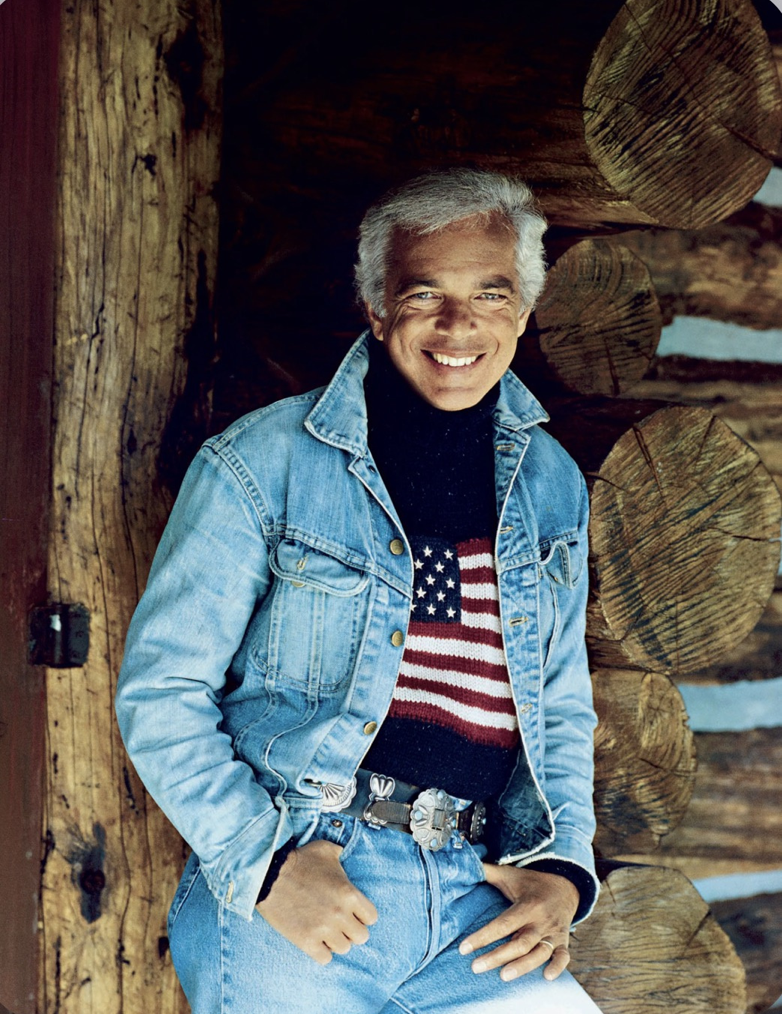
Hands down the most popular video series I’ve ever done is my “How to Recreate Designer Looks From Your Closet” series. I’ve covered Vivienne Westwood, Dries Van Noten, The Row, Dolce and Gabbana, Thom Browne, Simone Rocha, and multiple eras of Gucci and done deep dive videos on Prada, Alexander McQueen, and Margiela.
I’ve been long overdue for my next installment, but given *gestures broadly around at the world * it’s been hard to get excited about making some random designer video. Then, one bored night after my son was asleep I found myself watching the documentary Very Ralph on HBO which follows the life of, you guessed it, Ralph Lauren. Just a few minutes in to watching it and I was positively vibrating with musings on Ralph’s work, his business approach, and his influence as a Quintessentially American Figure at a moment when the American project itself is crumbling.
So I did a video on Ralph, but still I couldn’t get him out of my mind. There was just too much to fit in a little video.
I’ve always had genuinely conflicting feelings about Ralph, both as a person and as a brand. On one hand, I think he’s brilliant -- less as a designer, actually, and more as a person with style. He has an undeniable eye for juxtaposition and composition, for texture and patina. For ways to mix references, high and low, casual and fancy and make it make sense. I’m not sure there’s a designer with more obvious reverence for the way well-made clothes wear in over time and take on personality. He’s also got an undeniable eye for business and marketing -- his approach to creating not just a clothing line but a curated universe for that line to exist in may seem obvious to us now, in the days of branded-everything. But back when he was starting out, his ability to see past the product towards the world he wanted to create (and sell) to people was practically unheard of. This expansive business instinct is not necessarily something I admire (since I don’t actually think the vision to package and sell everything in sight is good for humanity), but it’s hard to deny its effectiveness.
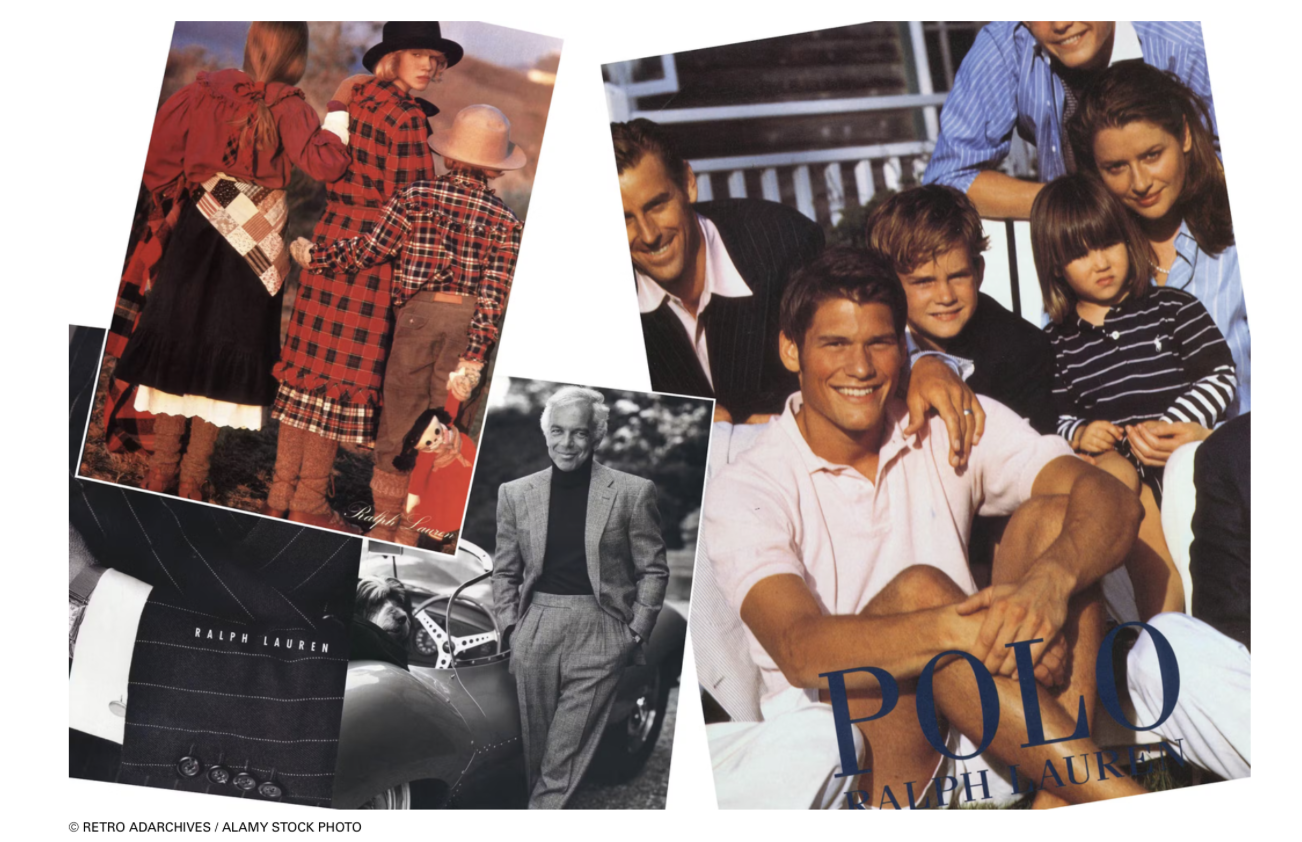
On the other hand, it’s hard not to be icked out by the world Ralph has created. A world that (until very recently) was extremely white. A world that is deeply patriotic. That celebrates the trappings of a heavily classed society. Of country clubs and cowboys. Of mansions and polo grounds. And beyond the abstract messaging of Ralph Lauren’s branding, there are the realities of how the business operates. A publicly-traded corporation, the Ralph Lauren Corporation has, in its decades-long existence, come under fire as most large corporations will for run-of-the-mill capitalist hellscape stuff like unsustainable production practices, allegations of discrimination and harassment by employees, copyright infringement, etc etc. As one of the few major American designers, Ralph has been a go-to for politicians on both sides of the aisle. He chose to dress Melania Trump for the 2017 presidential inauguration in a custom blue sweater set, but just a few years later he dressed Jill Biden for Joe Biden’s inauguration, and then she wore Ralph on the cover of Vogue -- looking regal alongside a quote that reads “We Will Decide Our Future.” A cover that has aged like milk.
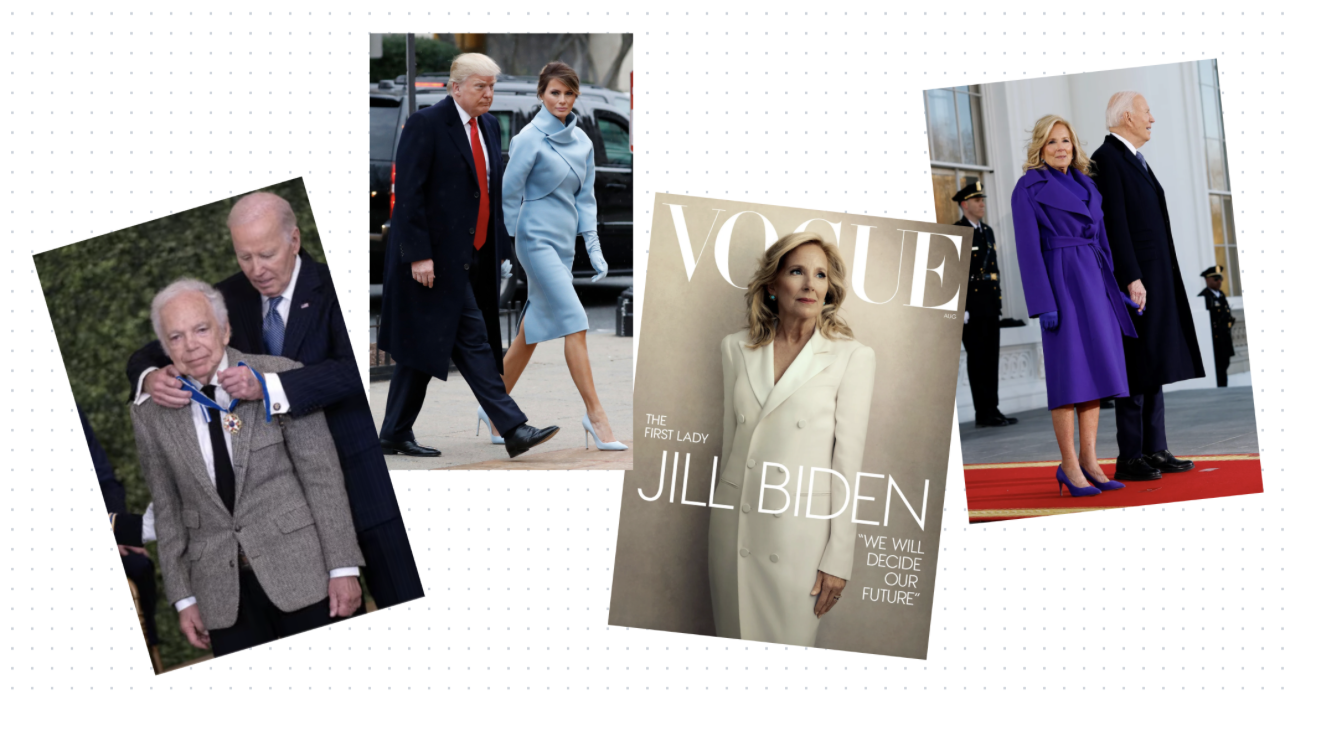
My gut is that this is less revealing about who Ralph Lauren voted for than it is about the nature of how wealth and power operate in this country. Politicians across the aisle wear Ralph Lauren so they can demonstrate their commitment to American businesses while still being dressed in clothes that signal luxury and status. They wear Ralph to be associated with the images of aspirational American-ness that his name conjures up. And Ralph dresses these politicians because they, in return, legitimize his brand as irrevocably woven into the very fabric of America. And get the brand’s name in the paper. If anything, the list of high profile Ralph Lauren wearers could be mapped quite neatly onto the elites of our country across the political spectrum. And in the way that revelations like the Epstein Files are bringing to light, what you realize is that at a certain tax bracket all these people -- despite their political misalignments -- are cozy with each other.
Ralph Lauren brand is also on the soft boycott list from Anti-Sweatshop Activists Against Apartheid for not just having store locations in Israel, but for contracting with Delta Galil Industries which “operates...in illegal settlements and was included in the 2020 UN list of companies doing business in illegal settlements.”
As much as I’d love to get into the nitty gritty of all the corporation’s dirty business practices, the reality is that if you look closely at any fashion conglomerate from Zara to the HM group to Gap to LVMH they’re all tangled up in a web of exploitation, environmental destruction, wage theft, and political complicity. Digging into the Ralph Lauren Corporation, specifically, would not be unique or revelatory. Nor is it the part of this brand I’m most interested in unpacking. The business tentacles of this company are gross but quotidian, but its position within the machinery of American self projection is fascinating.
Ralph Lauren was born Ralph Lifshitz in the Bronx in 1939 to Jewish parents who had immigrated to the United States from Belarus. This piece of trivia -- specifically the name change -- is often presented as a “gotcha,” like it reveals the deception inherent in Ralph’s work because “look, he hid his humble Jewish roots in service of his WASPy brand! He’s ashamed of his own name!” While that is an easy narrative, the reality is that Ralph and his brother George changed their last names as teenagers, following the lead of their older brother Jerry, who’d been relentlessly teased while serving in the US Air Force for having a last name with the word “shitz” in it (and I’m suuuuure that teasing had absolutely noooooo antisemitic undertones whatsoeverrrrrr.....).
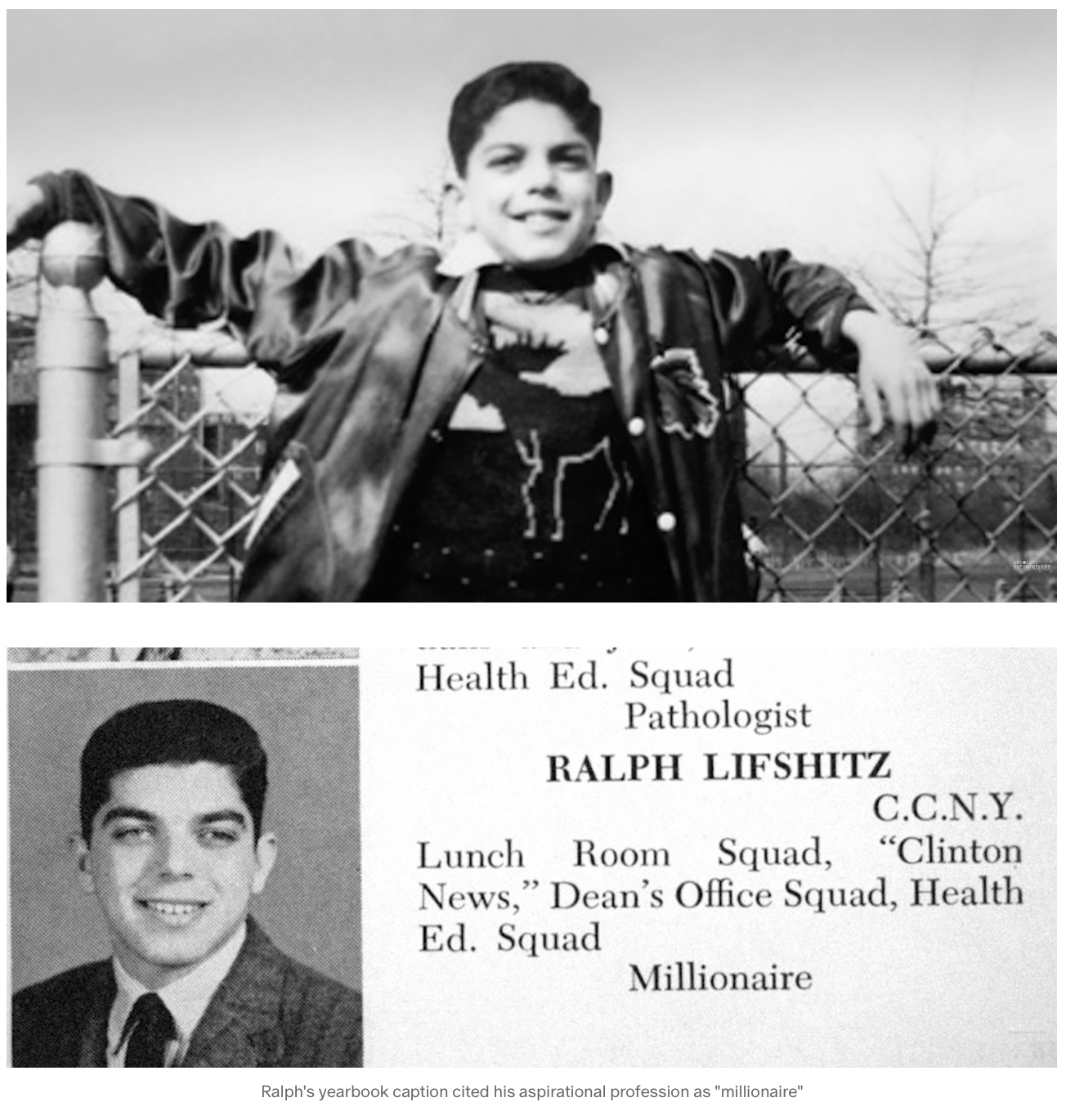
While it’s tempting to frame Ralph Lauren’s background as a salacious secret that could undercut the potency of his brand if people only knew!!!! The reality is that it’s actually what makes his brand so potent in the first place. Ralph Lauren, like many of America’s cultural generators, is able to so effectively encapsulate the American Myth because he came to it as an outsider. He grew up far away from the kinds of places we see in his work, learning about what it means to be an American not through experience but through film. Literally.
Ralph is obsessed with film and what we now call Old Hollywood. And his understanding of what America is supposed to be was formed by watching movies about what America is supposed to be... made by people who were, more often than not, also considered outsiders. Who were also Jewish immigrants whose families came to America for the promise of something better. The result of this distorted, reflective image creation is a cultural narrative of America rooted far more in fantasy and longing than in reality. And it’s why, more than anything else, more even than the word “Americana,” the best word we can use to understand Ralph Lauren’s work is “cinematic.”
Cinematic in that it is dramatic, emotional, and all-encompassing. Cinematic in that it is world-building and narrative. Cinematic in that there are distinct characters and archetypes we see over and over, and new ones who get folded into the extended universe each season. But also “cinematic” in that it is a fiction.
Ralph Lauren’s work is so effective because he stokes his own longing in his customers. Ralph Lauren advertises an image of America that makes us nostalgic for a past that never existed in the first place. Ralph’s work is a modern manifest destiny, but instead of land it’s leisure we are entitled to. A particular WASPy, individualistic, rugged definition of leisure that can only come after one has earned enough money to stop worrying and truly enjoy life.
Ralph had no formal fashion training. His father was an artist which informed his aesthetic eye, but beyond that he never went to fashion school or trained as a designer. But anyone who knew Ralph as a young man says the same thing: he had style. He had an eye for things that were interesting, novel, beautiful, high-quality. And an innate ability to compose outfits in ways that felt at once unexpected yet effortlessly natural. For young Ralph, clothing was not just about self expression but was the first step towards the class mobility he yearned for. Clothing was an accessible way for someone like him, from a relatively modest background, to at once stand out and fit in.
After attending business school, Ralph served in the army and then came home and worked as a shop assistant at Brooks Brothers. And, as Avery Trufleman so brilliantly covers in the American Ivy season of the podcast Articles of Interest -- nearly everything we now associate with classic, casual American style can be traced back to Brooks Brothers. Ralph got quite an education in the men’s fashion industry during his time at Brooks Brothers, paying close attention to how men shopped and how styles shifted. In 1966, after seeing Douglas Fairbanks Jr wearing a wide silk tie in a movie, Ralph couldn’t find a similarly wide tie anywhere and decided to make his own. And thus, an empire was born.
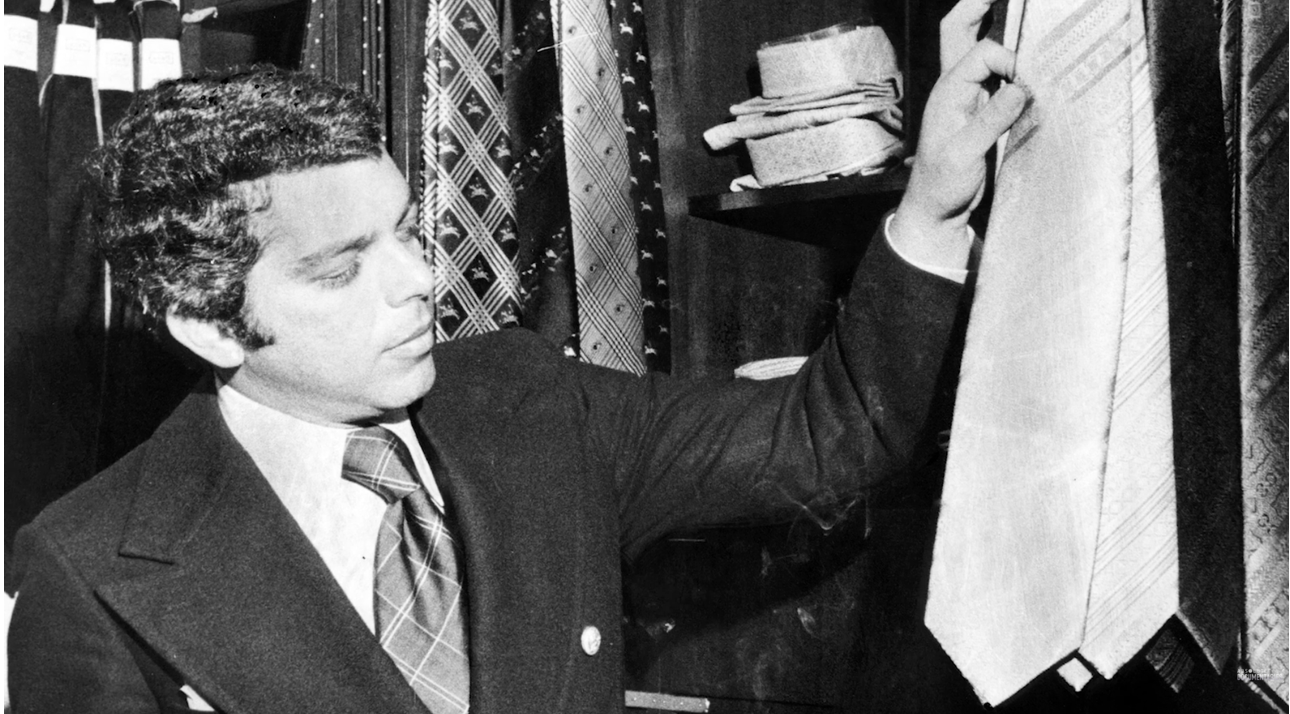
He decided to call the brand “Polo.” A name he thought would conjure up associations with Europe, kings, and wealth. A sport Ralph had never played himself. In naming the company Polo, Ralph branded himself with the elegance, refinement, and sartorial open-mindedness people associated with Europe and then styled it with an American sensibility of freedom, rebellion, leisure, and expansiveness.
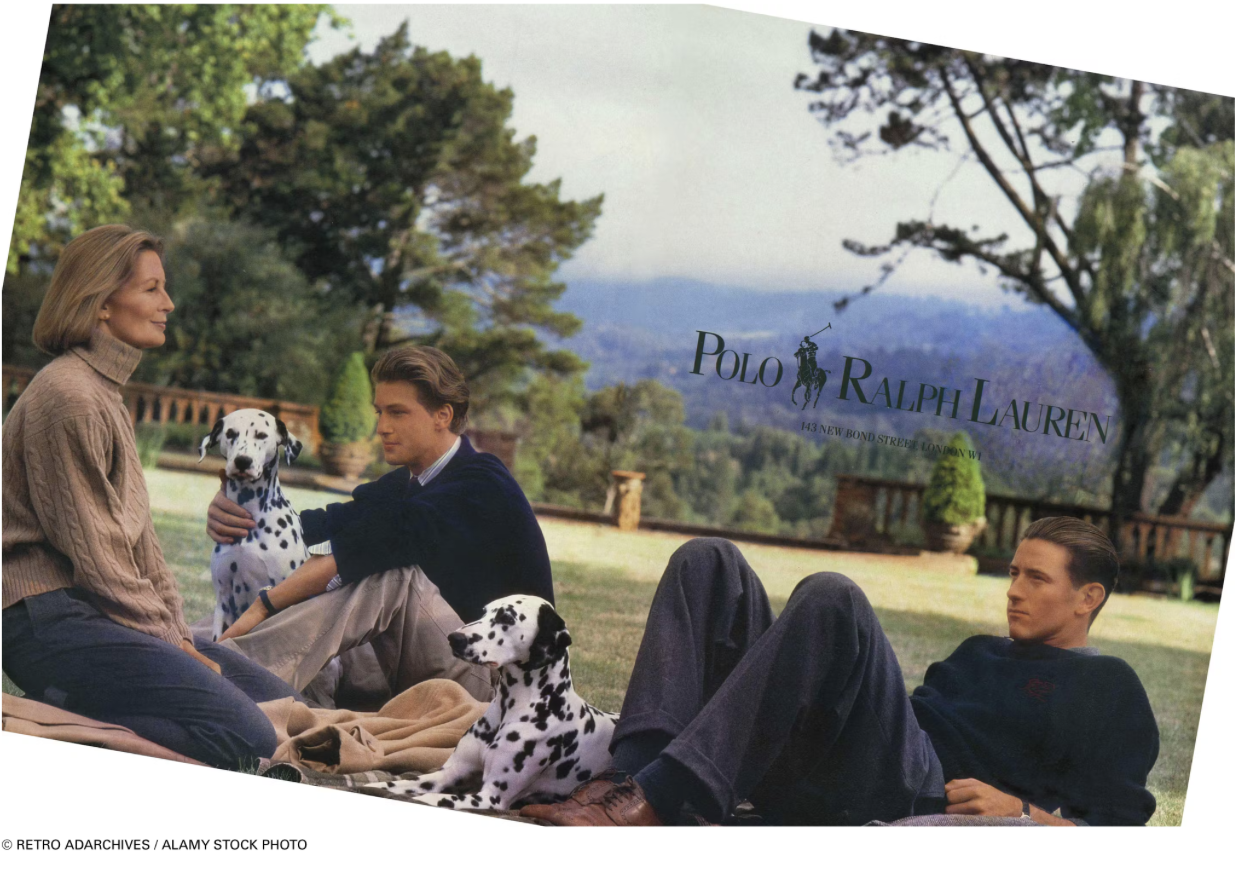
It wasn’t long before this scrappy little tie company expanded into a full menswear line, and then eventually a women’s line and dozens of other diffusion lines -- many of which are still around today such as RRL. It’s easy to see the little “films” in Ralph’s mind as he created runway collections, fragrances, home decor, and more. Archetypes emerge: the rugged John Wayne cowboy, the suave James Bond movie star, the preppy country clubber, the English countryside Equestrian. And as these characters walked down runways, inevitably they needed ranch homes and Manhattan apartments and beach cottages to exist in. And those settings needed home goods to fill them up. And once those spaces existed within the extended Ralph Lauren universe, the characters could mingle and blend. The cowboy could throw on the James Bond tuxedo jacket with his beat up jeans and boots. The Prepster could wear a denim ranch shirt over his polo shirt. And they could do this because Ralph could do this. Because all these characters are projections of the man Ralph dreamed of being when he was a little boy watching movies. And off that dream he created a business that could afford him a wealth grand enough to build out his fantasy world and then live in it. Ralph built the America for himself that he was led to believe was real, and has lived inside of that fantasy and sold it back to us. And if that’s not as American as apple pie, I don’t know what is.
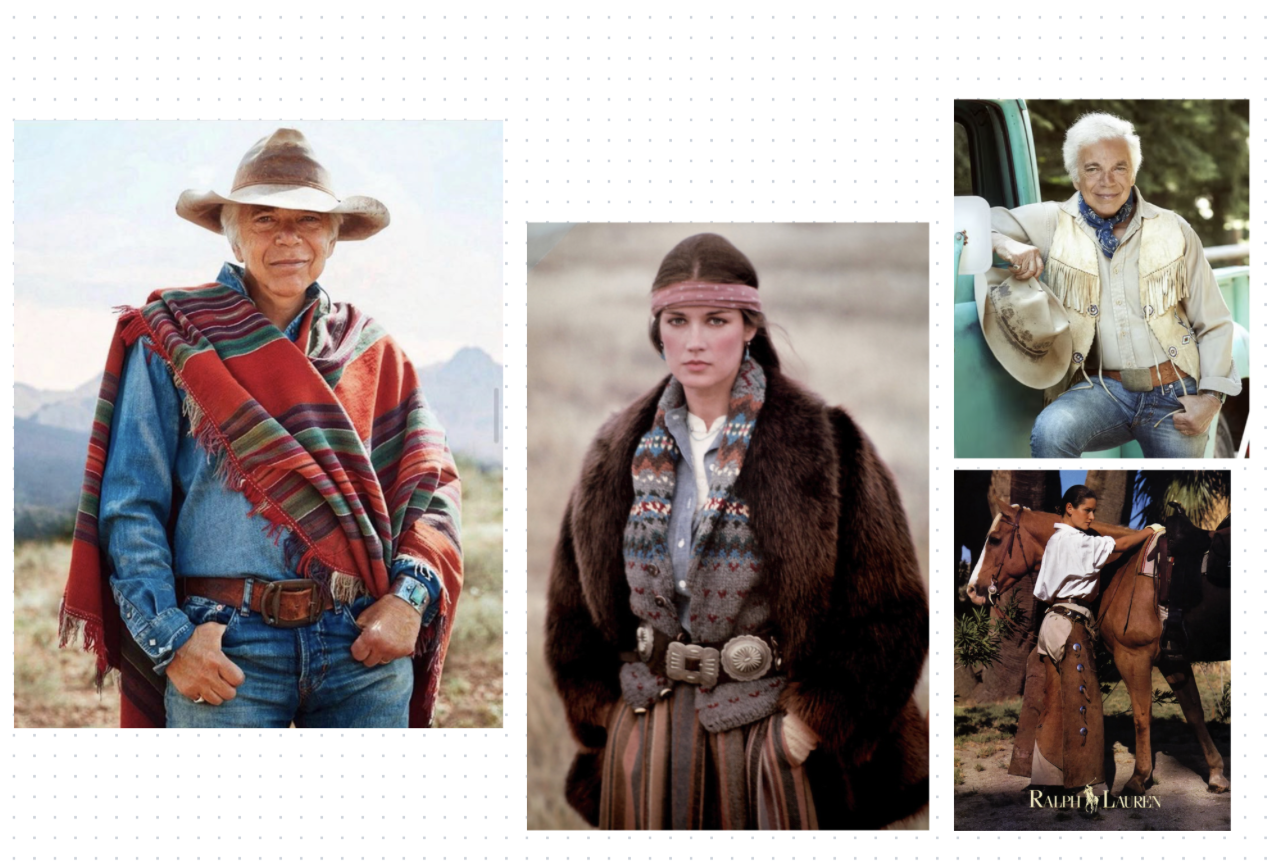
Another quintessentially American feature of Ralph Lauren’s work is its erasure of major swaths of non-white American history. Beyond the obvious fact that, arguably, Ralph’s work quietly erases the founder’s own Jewishness and otherness, the brand has repeatedly appropriated the garment traditions of other cultures and placed them within white settings. This is most obvious in the “Western wear” corner of the Ralph Lauren universe, where white people traipse about in fringed leather jackets, concho belts, and Diné patterned textiles (to name a few examples). A lot of clothing we call “Western” is not so neatly boxed up -- the way people dressed during this era reflected the messy, violent, and imbalanced interactions between American settlers, Spanish colonizers, Mexican vaqueros, Black cowboys, and Indigenous nations -- with each group either stealing, adopting, trading, embracing, or enforcing certain ways of dressing. Ralph’s vision of the American West was no doubt informed more by Western movies (which are very white) than it was by Western history (which is very non-white) -- and that is reflected in how he packages that rewritten history neatly within the lexicon of his brand.
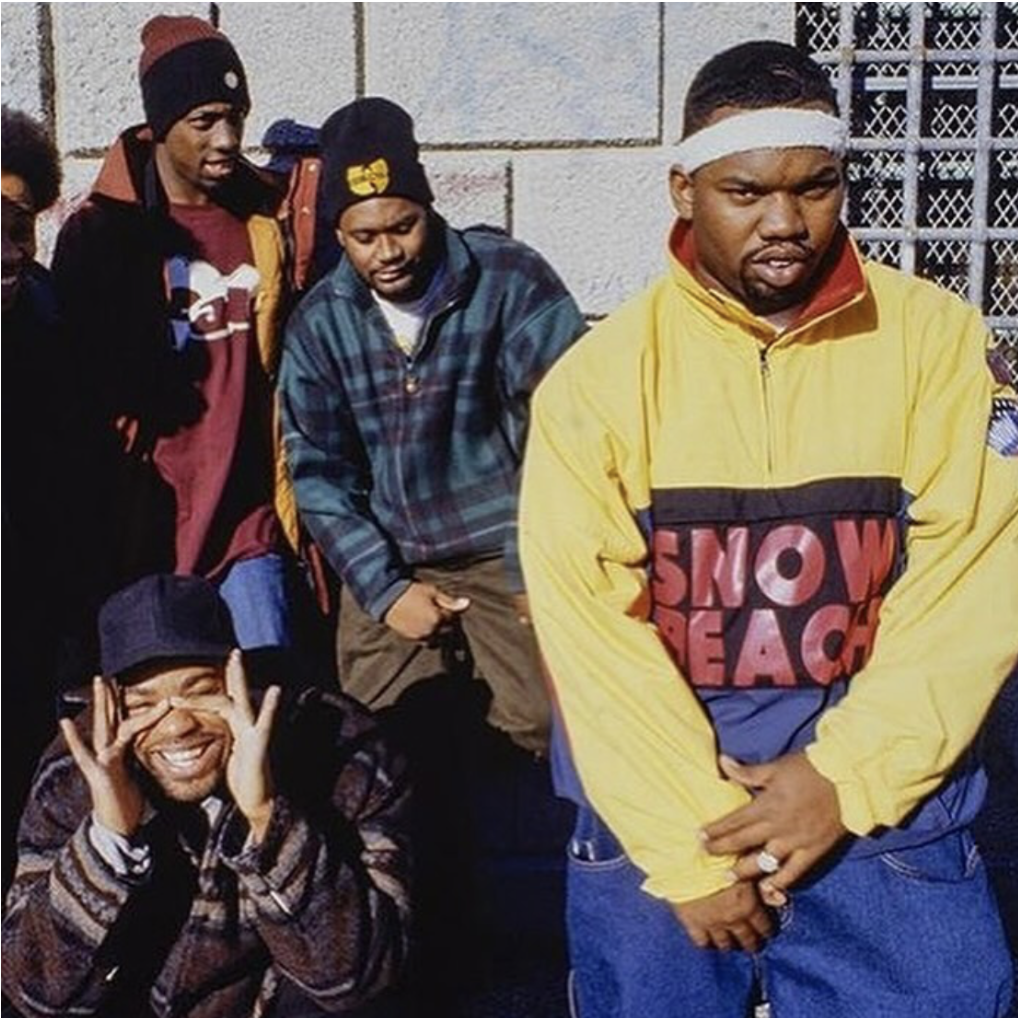
Ralph’s brand exploded in popularity and became synonymous with aspirational luxury. But at a moment when his dominance could have easily faded with the trends, Polo was kept relevant but an unlikely group of kids: the Lo Lifes. In the late 80s, two groups of Black teenagers from Brooklyn sparked a Ralph-obsessed subculture by trying to steal as many Polo products as they could. The cultural impact of this was enormous, reaching its peak when Raekwon wore the Polo Sport Snow Beach pullover for Wu-Tang’s “Can It All Be So Simple” music video. At exactly the moment Ralph Lauren was at risk of becoming too mainstream, The Lo Lifes managed to make it part of counterculture and keep it cool.
But despite the fact that there is, perhaps, nothing MORE true to Ralph Lauren than the aspirational, boundless longing of a bunch of New York kids who see clothing as an entry point to a better life....the company’s official stance on this, and on their Black customers, was of abhorrence and distance (enter Tommy Hilfiger, but that’s another story!). The brand does like to pat itself on the back for starting to feature Tyson Beckford in their ads and runway shows in the 80s.
In the last 15 years or so, RL has issued some direct apologies as well as made some overt attempts to correct past issues of appropriation and racism. In 2023 they announced an Artisan in Residence collaboration with Diné artist Naiomi Glass, certainly a gesture towards acknowledging how much indigenous work they have copied over the decades. They also put out their polarizing Oak Bluffs collection, a swing at honoring the historically Black town in Martha’s Vineyard.
In the same way that movies influenced Ralph, Ralph then influenced movies. While Diane Keaton famously self styled a lot of her most iconic looks in Annie Hall, almost all the pieces that weren’t from her own wardrobe were provided by Ralph. He also did Robert Redford’s costume design for The Great Gatsby -- an opportunity to truly see his work within the luxe, cinematic context that inspired him in the first place.
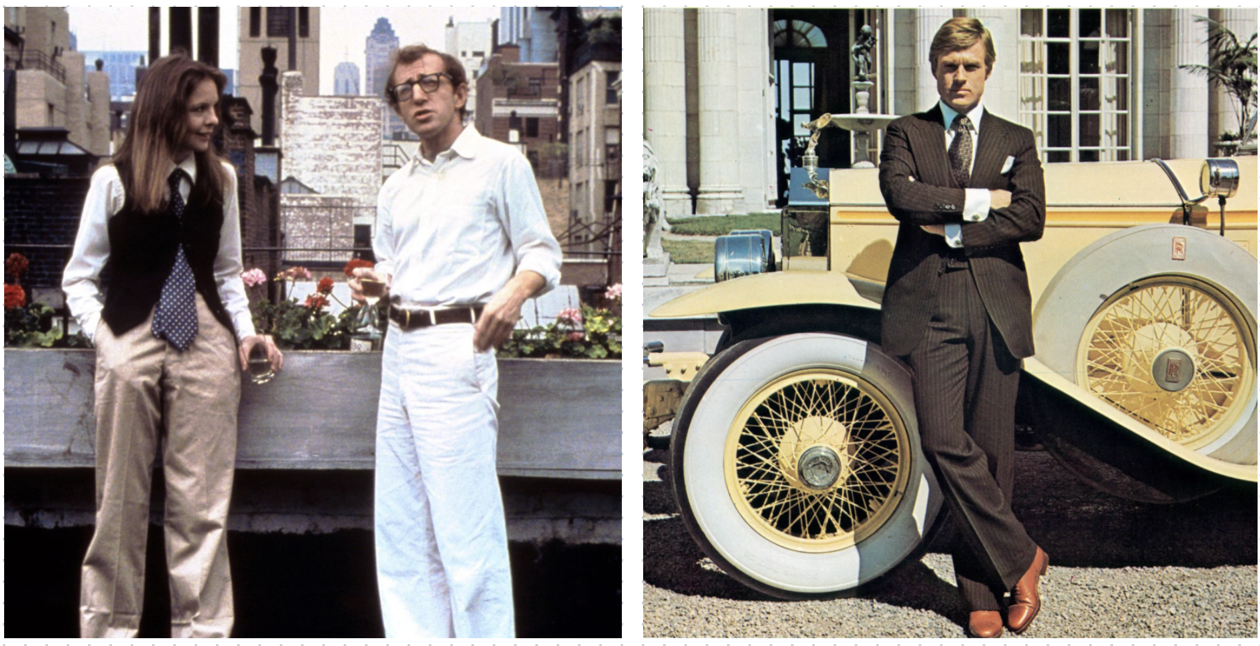
That’s the thing with Ralph. Maybe more than any other designer -- his influence is inescapable. He has influenced music, film, politics, sports, business, home design, travel. And in turn we can see American cultural history reflected, morphed, augmented, or conspicuously missing from how it was inevitably translated into Ralph’s work. He has had a consistent hand in shaping how Americans see ourselves. And if you’re like “ew no I wasn’t a preppy kid I haaaated Polo shirts!!” well, guess what? Then you, in your rejection of Ralph, were shaped by him, too. And ultimately, that’s what I’m interested in. More than trying to litigate whether it’s Good or Bad to wear his clothes (meh?), or whether we like the styles (I often do?), interrogating the massive success of this brand tells us a lot about the way America has gotten to where we are now. What happens when the whole thing is built on make believe, and we buy it anyway? Ralph Lauren - the man, the corporation, the work is all so tangled up in the beautiful, delusional, violent, impossible myths about what being an American is supposed to mean. A nostalgic fantasy forged ruthlessly, as if it was owed back to us. As if it ever existed at all.