Is Anything Cool?
How do you dress for being present in our current world when the unifying reality is that that no one is present?
I got a last-minute invite from a friend to go with her to a Studio 54-themed party. I am a lot of my friends’ last-minute party date because a) I love a party and b) I can always find something to wear with very little notice (stylist perks).
I really love getting dressed up, and I love a good theme party. Bonus points if I get to be creative with what I already have while still respecting the dress code. So obviously when the chance came to dress up like it’s Studio 54, I said YES! When it comes to Studio 54, the first thing people think is sparkles. But I wanted to really dig around in the history of the club for inspiration, because I knew it was more than just dressing like a disco ball. In fact, Studio 54 style had a ton of range. Halston, Norma Kamali, Stephen Burroughs, Giorgio di Sant’Angelo, Calvin Klein, Larry LeGaspi. Sparkles? Yes. But also lamé, jersey, denim, leather, satin. Sequin mini dresses, sure, but also suits, separates, jumpsuits, even jeans.
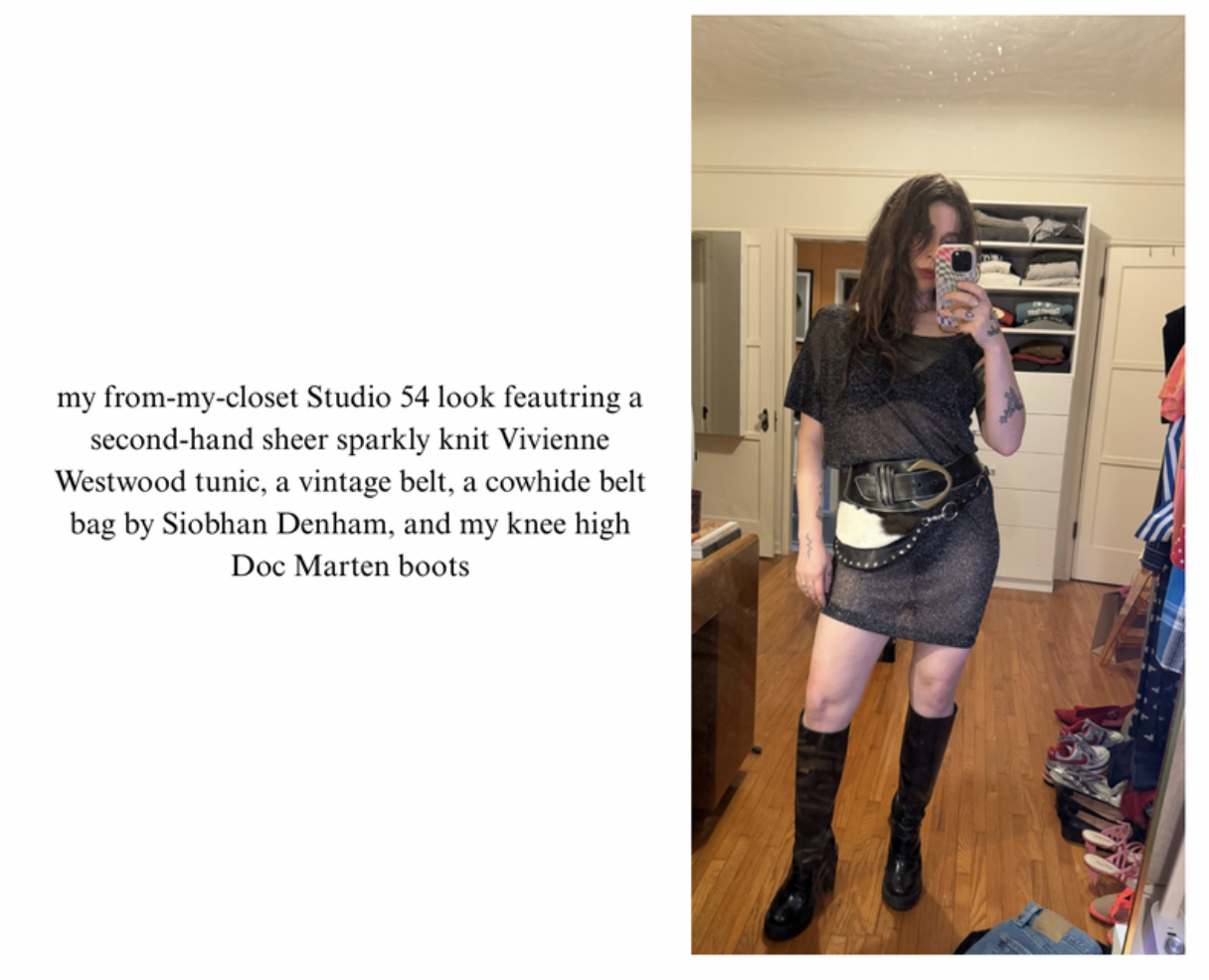
I was quite taken with the drapey, sensual knit styles that looked effortless to dance all night in (such as Norma Kamali and Halston) and opted for a little sheer knit sweater dress/tunic I’ve had for years:
I wanna be clear, my friend and I had an absolute blast that night. We always do. But I got an odd feeling at this party I couldn’t shake, and it lingered over me for days. I think this had less to do with the party itself, and more to do with what it reminded me about what has happened to parties in general...to doing things in general...to experiences at all. I found myself highly aware of the fact that, for almost everyone at this party, the party itself was perhaps equally as important as the images each person there could generate from being at the party to post on social media. . . or that the experience of being at the party might even be secondary to the images created there.
It’s not like everyone was sitting around ignoring each other taking photos (though I have been to parties like that too), but there was a sense of carefully-curated self consciousness. An awareness that these outfits and these experiences were not going to be confined to being consumed by people at the party, and in some ways were not even really FOR the party. They were for the images created by going to the party that could be used later and consumed by even more people. What does that self conscious image-centrism do to the kind of stylistic expression we prioritize when going out? The way it funnels us towards obvious, legible choices. Towards simplicity and overstatement. Because it isn’t something that just has to come across in real life, but it has to come across in a posed picture. Actually, it has to come across in a picture more than it has to come across in real life.
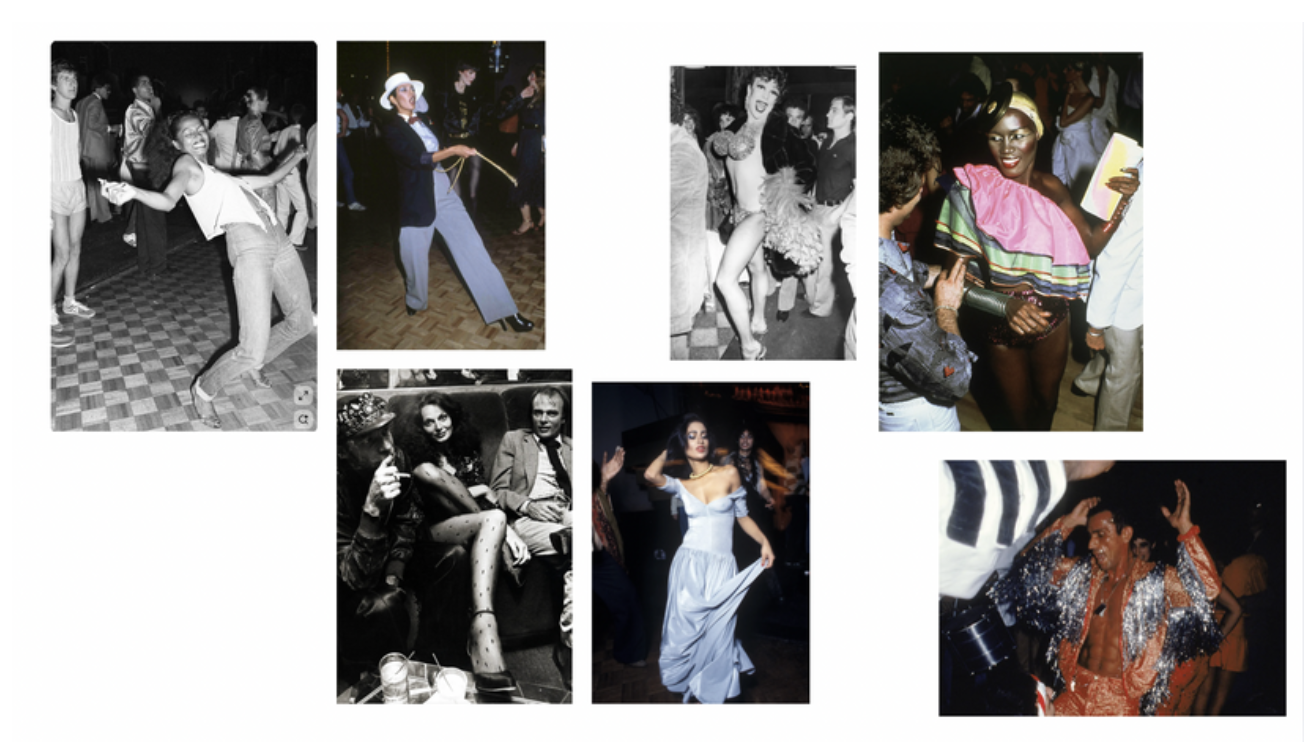
Looking at images from Studio 54, these outfits definitely photographed fabulously (which is part of why Studio 54 has remained such a cultural touchstone). But they also have a lot of nuance. Varied, rich textures. Fabrics and silhouettes meant to be seen in motion, meant to be felt by someone you’re dancing close to. Clothes that invite intimacy and exploration. And the people, even the superstar divas... they look a fabulous mess! Glistening with sweat, hair falling out of place, because they’re having a time. And that was the point. The design of the clothing was tied to the organic proliferation of this scene, which was an organic part of what was happening in the culture, in the socio-political climate, with Black culture, with queer culture, with the sexual revolution, with the fashion industry, with the music industry, with art, with celebrity. These things were all inextricable and authentic to the lived moment. The party made the clothes.
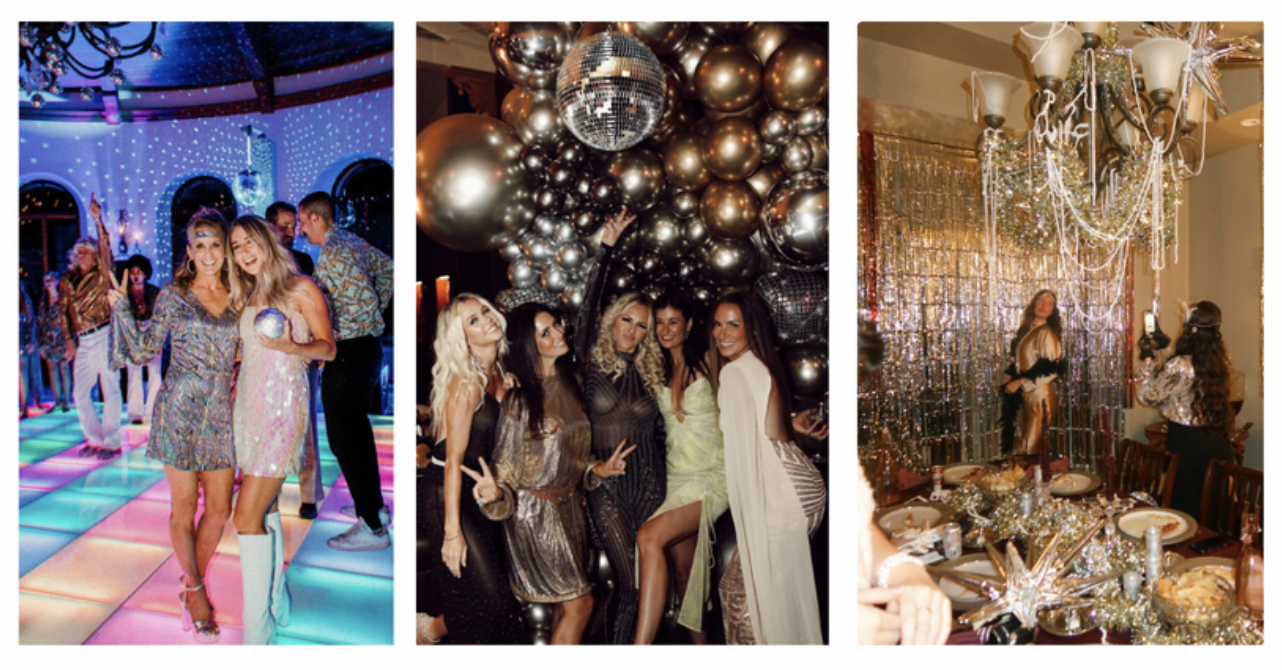
I want to be careful not to fall head-first into romanticizing the past. It’s not like people at Studio 54 weren’t thinking about their image or self presentation. It’s not that nobody ever felt self conscious or contrived. People were complicated and nuanced then, too. But at least the primary focus was on the experience there, in the present. Getting dressed was about how you looked AT THE PARTY, how you were perceived by other attendees, by your friends who were there -- not how you looked in the pictures FROM the party that were shared later to a bunch of people who weren’t.
You might be like “Okay Sophie, we get it, but unless you live in LA or are somehow affiliated with the entertainment industry, these kinds of parties aren’t actually that relevant to me and my life!” To which I will say that this isn’t about the party. It’s about how these parties reveal a broader social/cultural trend that exists no matter where you live or what you do.
Because broadly, it’s starting to feel like we’ve come to a place in our culture where the experience itself is not the point. The image/video created from having the experience is the point. And it’s not just the point, in many cases it’s the product. It’s creating a thing you can wrap your hands around, quantify, collect data on, or even use to sell someone something. And it’s not just that image-generation AT the experience has superseded the experience in terms of priorities, but that it often comes at the expense of the experience. We’ve all seen it -- people at meals, at museums, in nature, with their family doing what? Taking pictures on their phones, scrolling, posting, submerging themselves in the infinite alternate reality on a little device while our actual reality suffers for it right before our glazed eyes. A party where everyone is just taking pictures isn’t actually that fun, but does that matter if it looks fun in pictures? For anyone who doesn’t have to “create content” for a living, it’d be easy to think the influencers we follow (even the cool, creative, “authentic” ones) just happen to live beautiful lives that they briefly pause to take snapshots of to share with us. In reality, if you look at any content creator’s phone, it’s got a camera roll bursting with outtakes that took 30 minutes to shoot, the selfies that didn’t get picked, the 47 tries it took to artfully hold a lemon. I remember shopping at the farmers market once and seeing a girl reaching for an apple over and over and over without grabbing it. I was like “what the hell is going on here?” Then I looked behind her, where a friend was taking her picture. Once she got the shot she walked off without buying the fruit.
What does creating the image out of the moment require us to sacrifice in the moment? When did we cross this line into total dominance of The Image? When was the last time an art, music, or cultural movement wasn’t totally consumed by the requirement to self surveil and document and post in order to be relevant? In order to survive? And then what did that do to relevance, itself? To coolness?
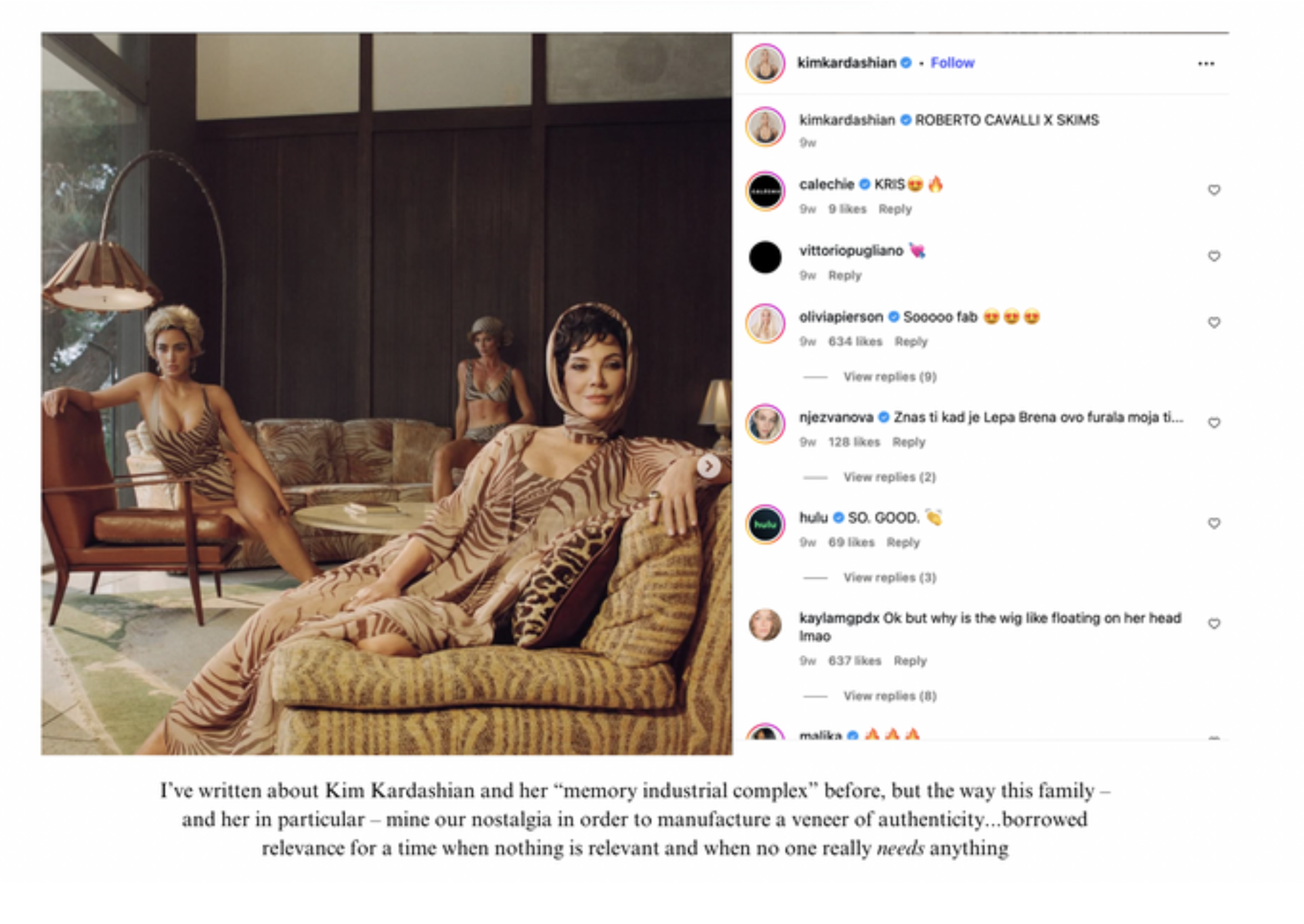
Where are things actually cool anymore? And I mean cool in the sort of bullshit, generic way -- as in where is exciting, avant garde taste being made? Where is there a fashion scene, music scene, art scene that isn’t so totally up its own ass in documenting itself and being documented and posting and reposting that it can actually just be about the thing and not the image of the thing? Ironically, even shows where you’re not supposed to bring your phone end up feeling contrived in their overt, enforced unplugged-ness -- like they only exist in reaction to the proliferation of phones, not separate from it. We can’t win!
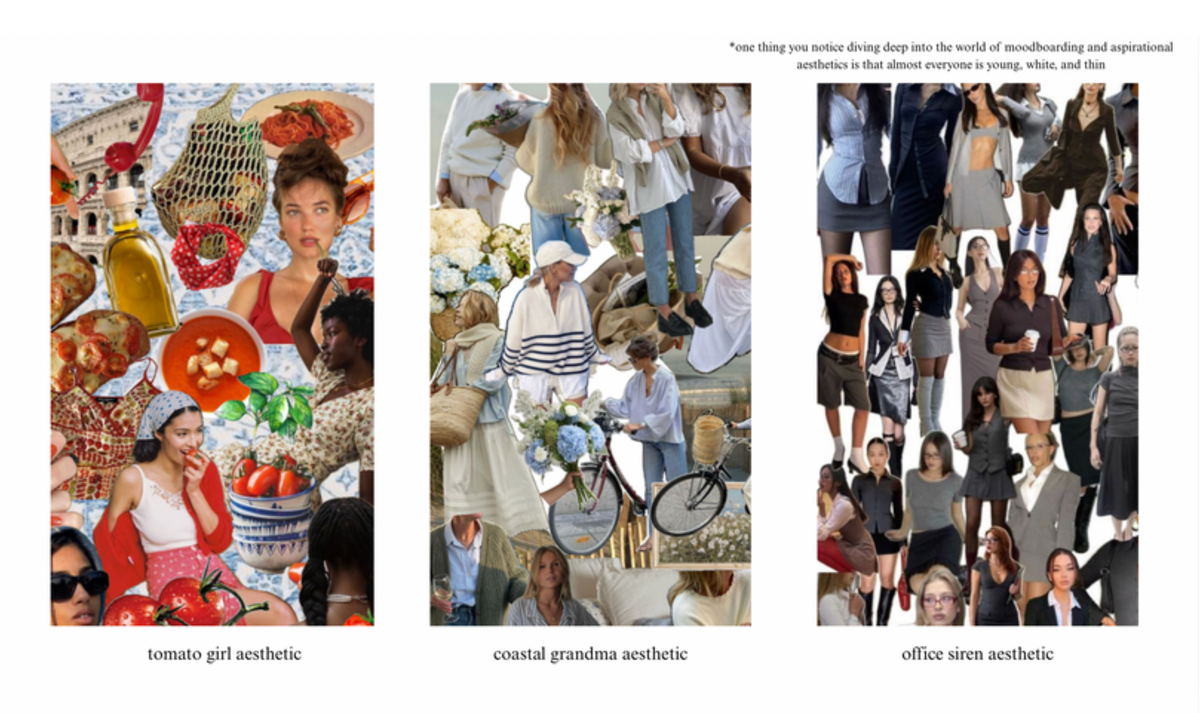
I’m not even saying I don’t like a theme or a vibe or a costume -- I actually mostly love these things! But I’m starting to think this age of themes and vibes and moodboards and dress codes and color stories and tomato girls and office sirens and desert aunts-- it’s all so self-aware and referential. It’s all so rooted in some imagined version of some other time when we were surely more present, more authentic, more something -- which feels like it speaks to a societal lack of any fucking clue about what it means to be authentic to right now. And maybe that’s because if you were to accurately reflect our current culture, if you were to try to dress for being present in our current world, the unifying reality would be that no one is present.
The total dominance of The Online Image is certainly twisted up with the ever-growing dominance of the Online Existence. In an era where more and more of our news, our politics, our relationships, our disasters, our art, our businesses play out online through our phones and screens — naturally less and less attention is paid to how they play out in the real, physical world. This is particularly useful to the tech oligarchs who capitalize off our captured attention while they pillage the planet for personal enrichment. While they ensure that the circumstances that benefit them remain — Online: thrilling and addictive. Real world: boring and sad. This starts to tip the scales of where we even feel the world exists in the first place. It starts to make online feel more “real” with more stakes and more noise and more connection than the actual world right outside our doors. And who could really argue with that in a country where our President mostly reigns from atop his Twitter Throne (or X or Truth or whatever).
And what even is an “experience” in a time where doing anything, making anything, sustaining anything is so fucking expensive that only the richest architects of our current shitty situation can even afford to create anything in it? No wonder every gathering has to mine cultural relevance from another era (90s party! Y2K party! Roaring 20s party! Old School Italian Deli Vibes! This New Pizza Restaurant Is Just Like A Real Life Pizzeria!) when our era’s most prominent cultural offerings are Tesla Diners and Ice Cream Museums. How could we possibly have a compelling vision for what modernity looks like when we experience most of it with our necks craned down at our phones? If I have to choose between the Kardashians’ vision of the present or escaping into the shallowest interpretation of the past, I guess I’ll choose the past every time. But it sucks that those seem to be the options.
Maybe you think I’m placing too much emphasis on the aesthetics of coolness. And while I’d never argue the aesthetics of something cool are more important than the values of something cool — almost every meaningful cultural or counter-cultural movement in history has had clearly-defined aesthetics. The Black Panthers, riot grrrls, punks, hippies, anti-war activists, Zapatistas, and on and on. But perhaps that’s just it. There can be no aesthetics of counter culture if there is no clear culture to counter.
How do you dress “authentically” for an existence that hardly plays out in the real world? Where our physical lives are so thoroughly controlled that many of us don’t leave our homes to go to work anymore, where our food can be delivered, our goods can be delivered, our groceries can be delivered. Where we don’t have to contend with the weather, with what physical movement might ask of our garments. Where the only “practical” clothes we’re sold are athleisure. Poly-stretch imitations of casual wear to be worn on a Zoom call, in the car, at the gym, grabbing a latte, posting a picture. And anything beyond that is an artificial vibe dreamed up on a mood board cobbled together from images of another era, from film, from AI, from an influencer who created her images based on a mood board cobbled together from images of another era, another influencer, and so on and on and on until infinity?
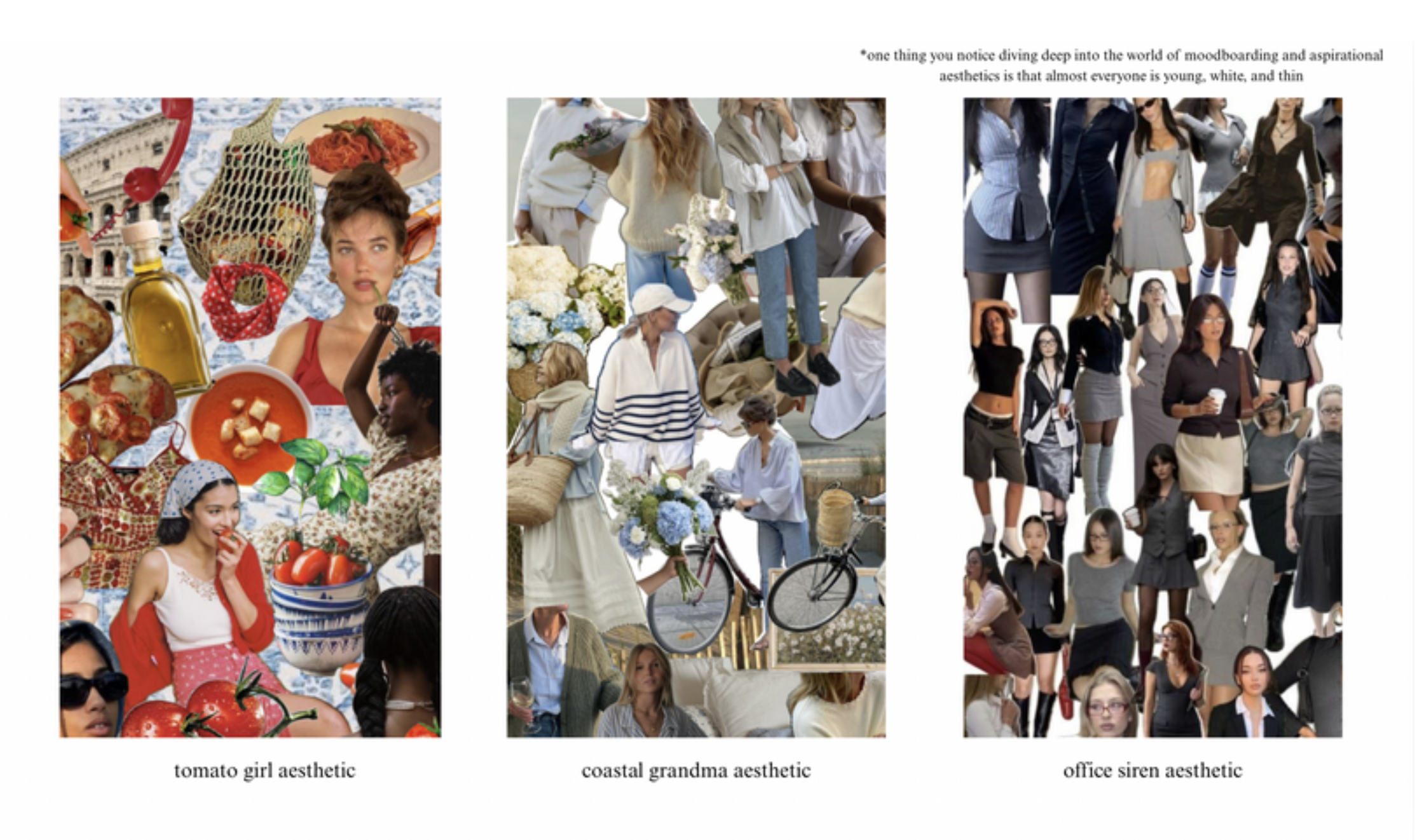
How do you dress authentically for an era where everyone is obsessed with other eras? Referencing the past is not new, humans have been doing it as long as we’ve had historical references to pull from. But we have reached total image saturation. All we consume all day long are images that tell us what our lives should be like based on what we think someone else’s life looks like. We build aesthetics rooted not in taste, experience, curation, the practical demands of our daily lives, or our actual personalities but in an imaginary character who is living a life those outfits might have been relevant to in another time (though usually not, because none of these things are real...I don’t know if there ever was a “tomato girl” except in advertising and movies, and certainly very few women who worked in offices actually dressed like an Office Siren). Or, at the very least, in an assemblage of infinite reference images that, while perhaps sparking a little inspiration, mostly create an intense sense of longing and inadequacy in us when we have to face the fact that our messy, complicated human lives don’t look as artful as the mood board. But hey, you can tap the tag in the picture to buy what she’s wearing anyway. And when it comes it’ll be disappointing and poorly-made but you’ll snap a selfie in it, post it, and tag the brand so someone else can put you on their mood board and buy the thing.
A few months ago I was reading Sunset Magazine on a family trip (a long-time fluffy favorite) and came across an article about something called Iron USA. At first, it sounded kind of interesting. Billed as a Future West festival, Sunset called Iron a place where “a new generation of riders, designers, and dreamers are gathering in Southern California. From panel talks on style and sustainability with Yellowstone’s costume designer to viral horseback rides through wildfires, IRON brings together the grit of rodeo with the polish of streetwear and the heart of ranch life. Expect roping demos, whiskey pours, and Western gear worth the splurge.” We’ve definitely been in a Western-fixated moment for a while now, and there are lots of artisans in this genre whose work is really exquisite. It’s also a “vibe” that is derived from the kind of clothes people wore for actual physical work -- clothes that made sense for ranching and riding horses, clothes that reflected local indigenous traditions. Reading about Iron, I had a fleeting moment of “I wonder if this could be cool to check out!” …and then I looked at the Instagram.
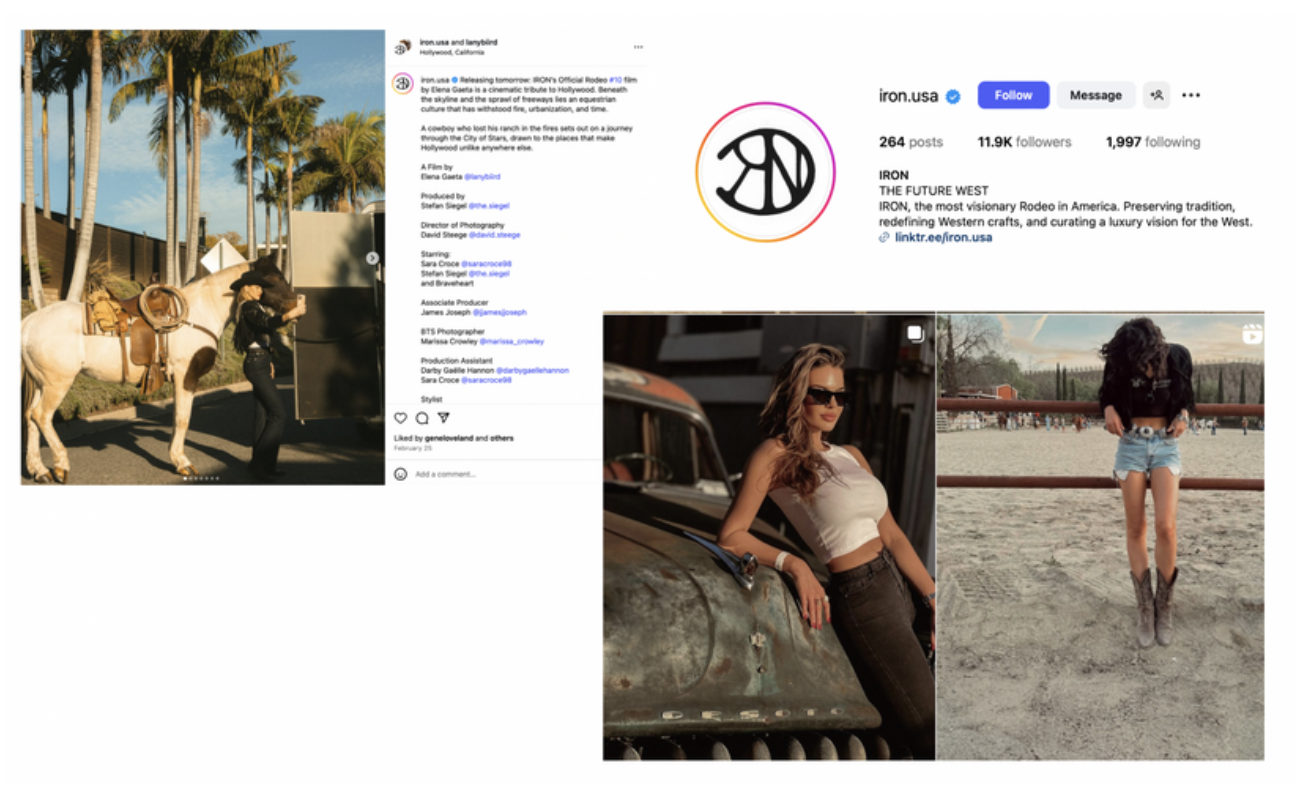
The reduction of an entire history and culture to a photo backdrop for people to pose in, to cash in on the esthetics of an experience that is totally irrelevant to them. Even though they do have some cool riders and performers -- I felt foolish for even thinking for one second that it might feel like a glimpse into something real. And I felt foolish as someone for whom this style is also not authentic, thinking it could somehow be available to me anyway in a way that wasn’t fake. Like I could buy a ticket and be dropped into the center of a meaningful experience I hadn’t earned. But of course the “vibes” we wish to tap into in order to escape our hollowed-out real world don’t actually exist in an authentic form just waiting for us to visit…unless we turn them into amusement parks. Of course this couldn’t be what I was looking for. And why was I looking for it?
This has all left me feeling pretty fucked up. And like I don’t know where to go or how to extricate myself completely from this ecosystem and, better yet, how to be a part of creating something better. It’s brought me to a place where I’m thinking about my own clothing. I love buying vintage for a million reasons and I will continue buying vintage clothing and this is not to dissuade anyone from doing it! But we live in an era where if you want our clothes to look worn in, we almost always either have to buy them manufactured to look worn or buy them previously worn-in by someone else. I know a vintage Levi’s vendor who sources them all over the country and then, depending on the size, will have his Dad wear them for a few weeks before he sells them. His dad fixes garage doors. The people buying them are mostly people like me -- city people with jobs and lives that have very little manual labor in them. What does that say about how far we’ve gotten from the original utility of our garments that we have to use a working-class person to lend their authenticity to them before putting them on our own bodies to make them “cool?” This doesn’t make me want to stop buying vintage denim, but it does make me want to be a little more intentional about putting my own wear into the jeans I already have, wearing them to do things with my body and time that bring me actual joy, and perhaps away from being perceived. In the garden, making crafts, cooking, organizing, playing with my son. Not because my goal is “cooler” visual wear but because I want to focus more on wearing what I already have as regularly as possible, putting my own life into these pieces, too.
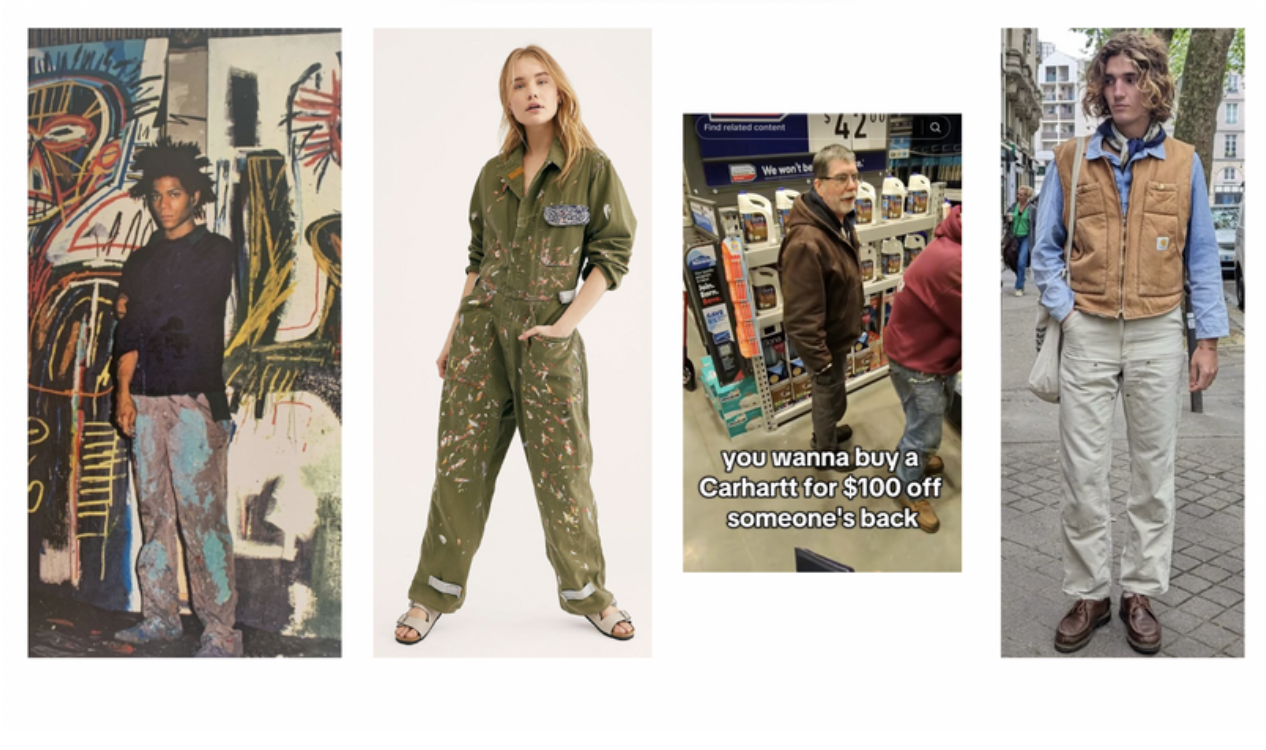
I still care deeply about personal style (obviously), and in many ways it actually cements for me how much I believe in the approach to personal style I’m trying to build for myself and also help others build. But it does make me really want to tease out the parts of this that are rooted in expression, art, exploration, identity, and connection from the parts of it that are fueled by a desire to create consumable imagery.
Living in such an intensely image-centric culture makes us feel like our lives are not enough as they are. They are not dreamy enough, vibey enough, cinematic enough, curated enough. Which, of course, no one’s lives actually are. But also, surprise surprise, that feeling makes us hungry to buy things in the hopes that they’ll make us feel like enough, from ads that are marketed to us using the very same kind of imagery that makes us yearn to be enough. What does it mean that we are compelled to measure the value of our lives by what can be aesthetically captured in an image? How does that devalue what can’t be filmed and posted? And maybe the answer to my question about “what’s cool” can be reverse-engineered from this point. Maybe “what’s cool” now is the ways we connect with each other and with ourselves simply because we want to, doing the things that are not intended to be shared online or turned into imagery -- or even better, that can’t be turned into pretty imagery even if we tried. The way we tend to a garden, go on a walk, have dinner with a friend where the gossip is so juicy you lose track of time and the background blurs. Camping, cooking something new from a cookbook, something old from memory, just making it up. The feeling of simply sitting somewhere and letting your mind wander. Spending hours noodling around on a garment you’re upcycling, dying, cutting, sewing. Gathering friends together. The times we go into the world and move slow and are there to be there for real. To take action, show up for each other. Canvass, organize, fight, hold hands, take a fucking nap.
And if we take a more generic, superficial definition of the word cool: where are things actually on the vanguard of thought, creation, experience, music, art, dance, and community happening? Does it have an aesthetic? Could it possibly not? Does that even exist or have all those things been hollowed out by their reduction to how well they translate on social media? And obviously I know the whole thing about these famously cool moments in history is that they can’t be forced, they have to happen organically, authentically. But I’m seriously asking, is anything cool anymore? Or did we ruin it? What are the truly cool places, gatherings, events, experiences, actions of our era? And how do we protect them?