Kim Kardashian, Kate Soper, and Envisioning Post-Growth Style
What if good style isn't about "more?" What if "more" is actually antithetical to good style?
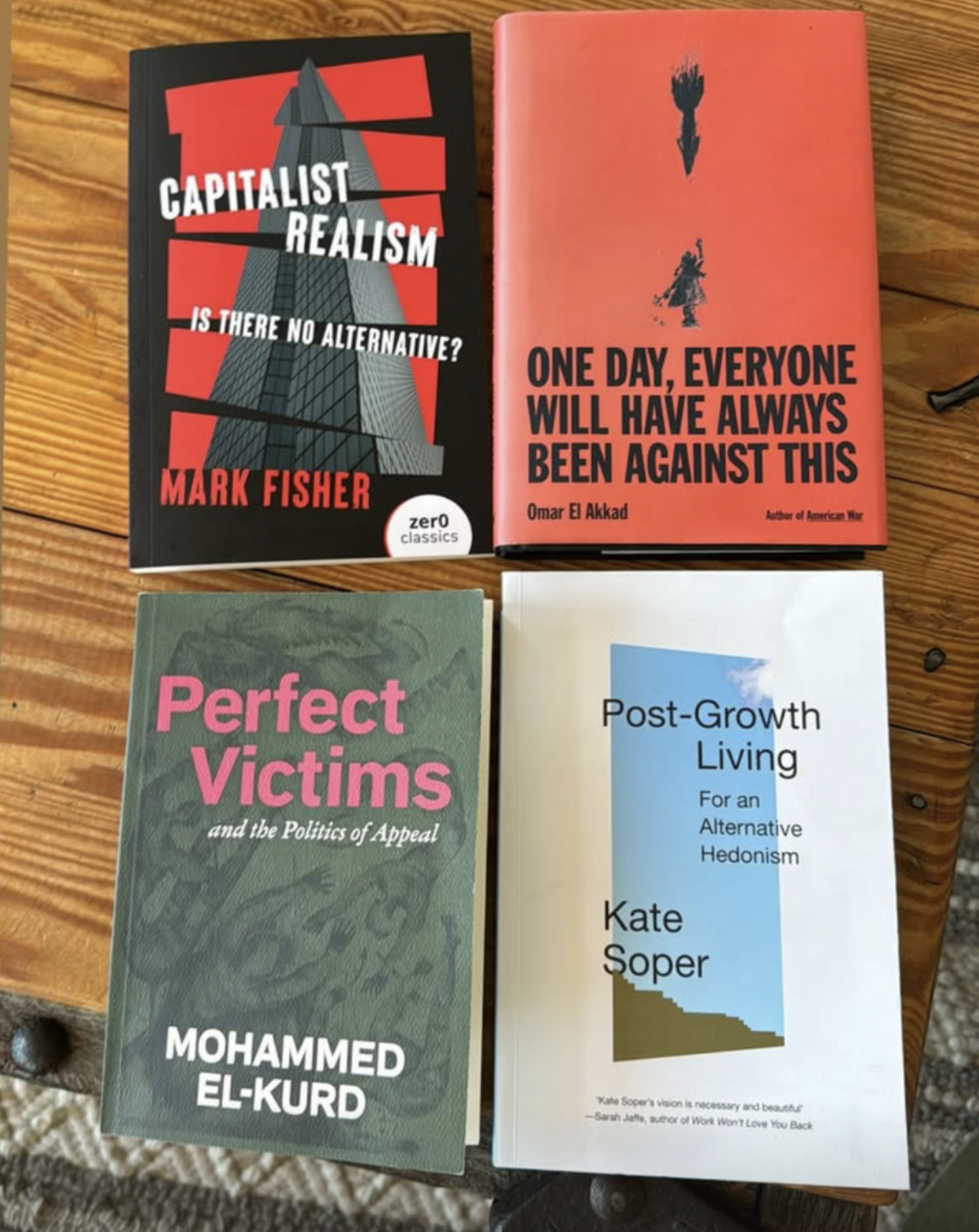
On a little family trip this weekend I popped into a local bookstore and stumbled upon a book called Post-Growth Living: For an Alternative Hedonism by Kate Soper.
If you've never heard of the "De-Growth" movement or "Post-Growth" area of academia, a brief summary:
"Degrowth is a social and academic movement that critiques the idea of economic growth, particularly as measured by GDP. It advocates for societies that prioritize social and ecological well-being over corporate profits and excessive consumption, aiming to reduce the global economy's material size."
In less jargony terms it's an anti-capitalist movement that very specifically picks apart the idea that infinite growth as defined by our current systems (infinite profit, infinite expansion, infinite development, infinite acquisition, etc) as a metric for how good things are for anything that matters (like people, the planet, animals, etc). And that, actually -- when platformed as the ultimate goal, infinite growth is actively pretty bad for almost everything that matters.
If you're here on my Substack, you're probably like....yeah, duh.
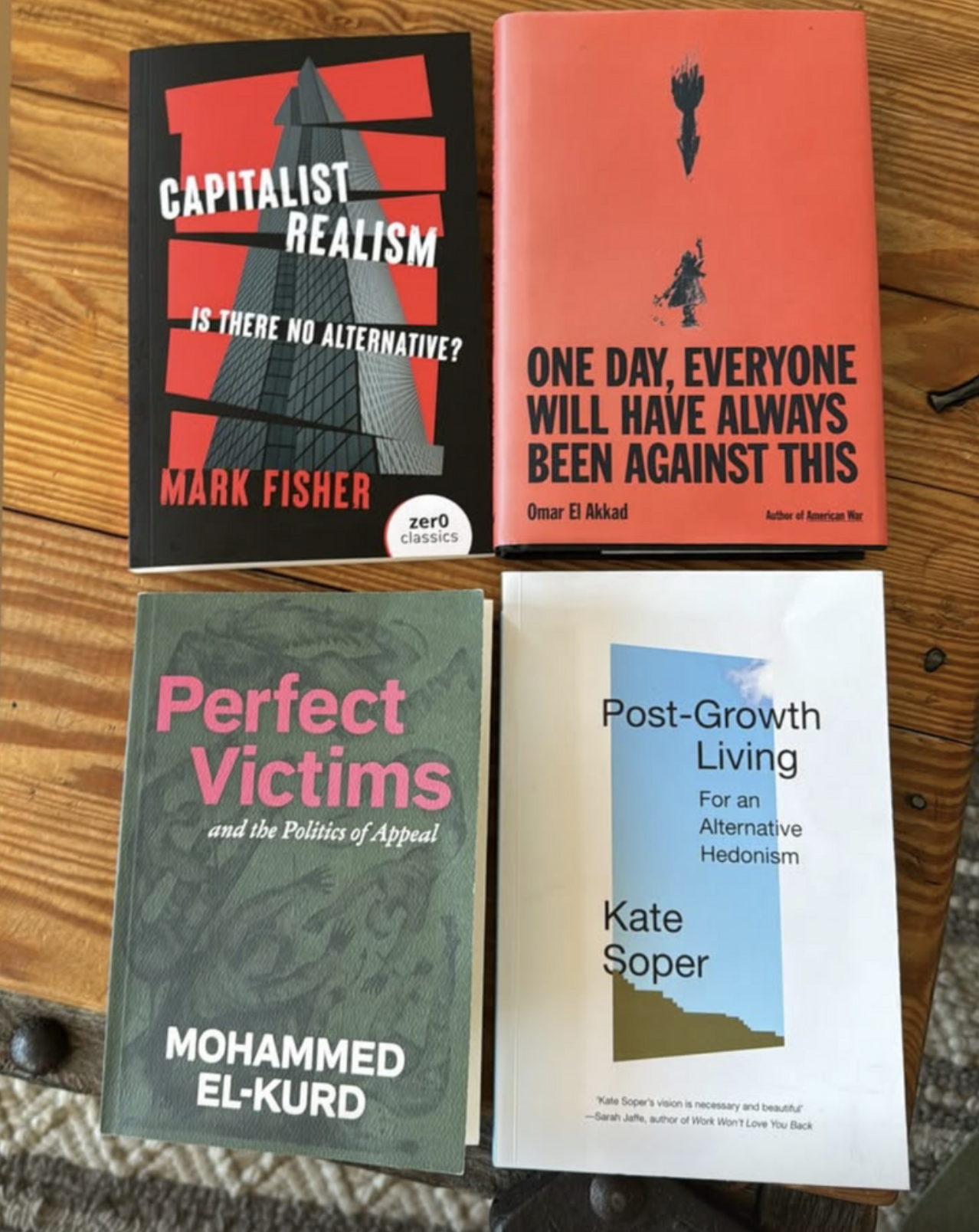
De-Growth is a super interesting theory/movement and if it's a topic you're curious to learn more about, The Limits to Growth is considered the foundational text on it (though I'll admit haven't read it! but my brother has his masters degree in de-growth so it's a topic we talk about a lot in our home).
Soper's book takes this idea --that we would all be existentially better off if we weren't chained to the ever-expanding hamster wheel of economic growth-- and grounds it in the material reality of everyday consumerism with a positive vision for what a culture and life defined by different metrics of progress might look like. Namely, that when we talk about about making changes towards more sustainable living we almost always frame it in terms of sacrifice: the things we must give up, the pleasure we must deny ourselves for the greater good.
Her argument (which is correct, I think) is that this is a pretty bad way to message the change we need, and also a genuinely incomplete picture of our goals. We may actually stand to gaina great amount of pleasure, joy, and fulfillment from a less growth-driven, less consumerist lifestyle. That the demands on us as both workers to produce at this rate and as consumers to buy at this rate can be, even under the best of circumstances, draining and empty. And that a model of "the good life" that doesn't center around being able to buy lots of stuff might actually give way more of us a better "good life" than we can imagine. More quality time with loved ones, more rest, more exploration, more development of interests and hobbies that aren't confined by the pressures of being profitable. More emphasis on community and art. This is Soper's "alternative hedonism." The argument that, actually, under our current system we are already denying ourselves pleasure, we are sacrificing more. That rejecting capitalism is not about ascetic negation, but about the possibilities for pleasure and growth of another kind.
In a review of the book, author Jeremy Gilbert says "No task could be more urgent than the one that this book accomplishes so brilliantly. For life on Earth to survive, we have to change not just what we consume, but how we feel about consuming. Guilt and deprivation won’t save us. A different kind of hedonism, an aesthetic and sensibility not enslaved by addictive consumerism, are indispensable components of any culture that hopes to survive this century. Alternative Prosperity offers a lucid, profound and pragmatic exploration of these issues, elaborating both on what such a radical recalibration of our sensibilities might entail, and what concrete political measures might achieve it."
This has tapped into something I've been thinking about for a while now with regards to style, but wasn't sure how to articulate. In my work and on social media I talk a lot about sustainability -- reducing consumption, shopping second-hand first, swapping, renting, and shopping slow and small as much as possible. And that truly connecting with one's personal style can be a conduit for these sustainable changes, can free you from the hyper-consumerism of the trend cycle we live in. For anyone who's already integrated those behaviors into their lives, you know this way of approaching personal style and shopping feels almost entirely positive. It's not like you're standing outside the shop windows of big box brands yearning for their version of a barrel pant but being held back by your staunch commitment to your values. You're just having a nice time building a wardrobe that feels authentic to you! But from the outside, this behavioral change sounds like a lot of sacrifice.
I hear this from clients a lot. That they want to do the "right" thing but it sounds hard, daunting, restrictive, un-fun, not expressive. They feel guilty about their unethical consumption but also like changing their behavior would leave them without the outfits they need, feeling less cute or cool or comfortable. The irony is that it's this very same consumerism that has made them unsatisfied enough with their style that they decided to hire me in the first place. Deep down they know this behavior is not working, let alone bringing them joy. But no one has painted a picture for them that an alternative is not just possible, but pleasurable!
Of this, Soper says "The call to consume less is often presented as undesirable and authoritarian. Yet, the market itself has become an authoritarian force -- commanding people to sacrifice or marginalize everything that is not commercially viable; condemning them to long hours of often very boring work to provide stuff that often isn't really needed; [and] monopolizing conceptions of the 'good life.'"
The thing about approaching style this way is it's truly a no-lose situation (unless you're a fast fashion exec). In addition to the obvious good ethical stuff like less garment waste and less exploitation of garment workers, there's good personal stuff too! Slowing down the rate of fashion consumption doesn't feel like self denial, it feels like savoring. It feels like relief when, after waiting a day on a tempting purchase, you realize you don't actually want it and you're grateful you didn't spend your hard-earned money on it. Connecting with your personal style so that you can make informed choices about the purchases you make and the outfits you wear doesn't feel restrictive, it feels informed. It gives you the confidence to identify choices rooted in your actual desires instead of desires that have been manufactured and fed to you by advertising. Shopping second-hand allows you to step outside of the dominant trends and find your own voice from a nearly endless well of existing pieces. Shopping local and small businesses connects you to your community, as does getting your clothes mended or altered. Learning to mend, knit, sew, crochet, dye, weave, darn, or embroider gives you a sense of pride and purposefulness. Properly caring for and mending or upcycling or making garments can be a creative outlet, artistic expression, or simply a nice way to meditate and feel present in a small task. It makes you feel an even deeper connection and sense of individuality when you wear the garments -- while also being a conversation starter to meet new people or something that represents your belonging to a certain community. Make you feel more queer more punk more sporty more outdoorsy more mature more open more artsy more accomplished more tender more more more more more.
When I compare what it feels like to practice slow fashion with what I see from someone like Kim Kardashian -- our society's apex example of aspirational fashion consumption -- it's not even a contest. I don't even want to get into Kim as a fast fashion executive (SKIMS) who produces clothes.... for our purposes I just want to talk about Kim as a consumer. Kim is covered breathlessly in the media for her conspicuous consumption, and a large portion of her social media presence and TV show is about watching her live a fairytale life of glamour and wealth, which means buying buying buying things. And things have to get more and more absurd to give her the average consumer's dopamine rush -- a cross owned by Princess Diana, Jackie Kennedy's watch, etc. In addition to her massive walk-in closet, Kim famously has a warehouse full of over 30,000 more items of clothing. That's insane. If she wore a different piece from her warehouse every single day of her life it would take her 82 years to wear everything in the warehouse...and that's not including her giant closet at home or all the things she is surely going to continue buying going forward!! This is not aspirational! This is not pleasurable! This is a sickness!
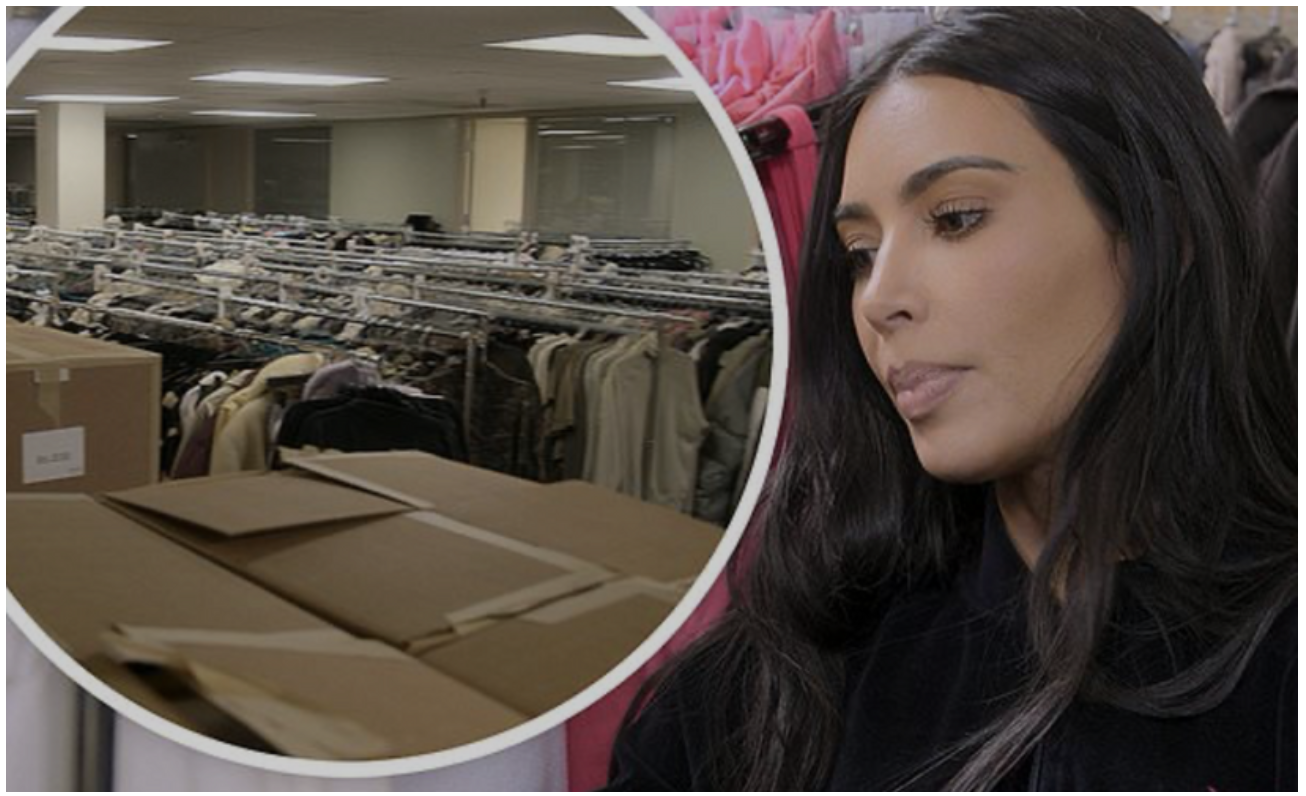
This is a person with an insatiable hunger for stuff, an inability to feel like she has enough, and no sense of how to sate that hunger beyond buying things. Have you ever done a white elephant party or gotten a Christmas stocking or goody bag full of little silly trinkets that are fun for a second but then almost immediately become Random Shit In Your House? You know that rapid high and low cycle of "yeeee STUFF!" followed by a crash? Kim, whose wealth and lifestyle we are supposed to be jealous of, lives inside that cycle. This is a person crushing herself under the weight of her bottomless consumerism to the point of needing to buy major pieces of real estate just to house her THINGS in... and for what?? She's not using it! She doesn't even wear most of it, she can't!! It just sits in a warehouse she visits occasionally and obsesses over all the "memories" held in each item as she walks by (I could write a dissertation on the Kardashians and what they'll do in service of "memories," but I digress). She daydreams about passing these things on to her children who all, certainly, will grow up with similar consumption habits and need warehouses all their own. And we are supposed to want this?! This is the best we can hope for?? This is the ceiling of goodness on our system's imagination? We are supposed to be willing to drain our precious free time toiling at jobs fantasizing that this level of maddening, devouring consumption might be available to us one day if we work hard enough?! Is this really the good life?? Or is it an indictment of our current definition of progress, of success, of pleasure? That it's totally perverse and needs to be remade completely.
A couple years ago the Conscious Life and Style Podcast did a fantastic episode called Seven Alternative Fashion Business Models with guest host Stella Hertantyo. The episode functions as a fashion industry-focused microcosm of exactly what De-Growth and Soper's book are getting at. Mainstream fashion as it currently exists is a "business model that aspires to never-ending growth — and overproduction and overconsumption are both the enablers and drivers behind this growth." Quoting a paper by Kate Fletcher, Hertantyo describes slow fashion as “a different worldview that names a coherent set of fashion activities that promote a variety and multiplicity of fashion production and consumption and that celebrates the pleasure andcultural significance of fashion within biophysical limits.”
So basically....make stuff that's meaningful and useful without making more of it than our planet or human workforce can handle. Seems reasonable!
It goes on: "This shift requires a change in how we perceive prosperity, which has recently been described as the embracing of sufficiency.
Sufficiency describes a focus on wellbeing rather than monetary outcomes, advocating for equity and fairness for people and the planet, having enough for a healthy and meaningful life while avoiding excess, and a collective sense of commitment and responsibility.
In simple terms, this means that we cannot simultaneously exist on a planet with finite limits and continue to infinitely produce, consume, and waste – and call this prosperity."
Sufficiency doesn't sound so bad, right? But the word conjures to mind sacrifice. This is where Soper's work comes in -- how do we message the idea that there is a pleasure in sufficiency that our current definition of prosperity/growth cannot generate? How do we make it sexy? How do we grow a movement rooted in hedonistic sufficiency?
The reality is that change is hard, even if it's change for the better. No matter what shifts we work towards within ourselves and broadly as a society there will be growing pains, things we can't take with us. There are materials, technologies, innovations, and a level of abundance (really excess) that won't make the cut. That maybe we don't get to have a different pilates outfit for every day of the week. Maybe we have one or two sets of work out clothes that we wash, mend, and rewear til they die before we buy more. Maybe our fixation on perfect clean crisp newness in our clothes doesn't survive the system change. Because clothes are meant to be worn, and if they get worn they fade, get holes, get mended, show signs of use. Maybe the average person's clothing is not quite as high-performance with the moisture wicking and waterproofing and sweat resistance. Maybe there are problems we have to solve with approach instead of endless product specificity. Maybe there's less merch, maybe getting an outfit together for a costume party requires a little more notice than what we've grown accustomed to with Amazon Prime 2-Day Shipping.
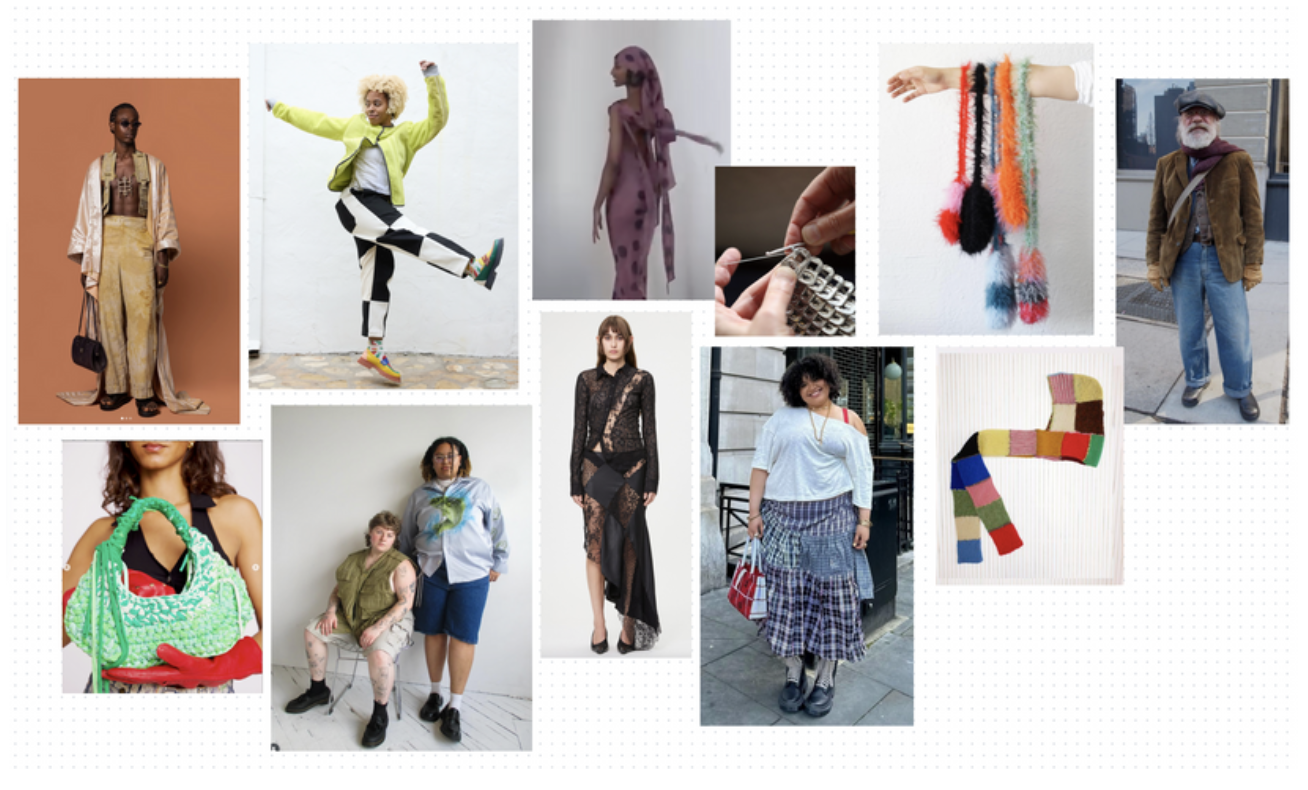
But as much as we can dwell on what might be lost, I think it is nothing compared to what we stand to gain. An appreciation for craftsmanship and artistry and a sense of connection and responsibility for the items we take into our lives, such that we take pride in them, mend them, cherish them. A freedom from the pressures of newness, of having a fresh outfit every time you're seen or photographed. More emphasis on high-quality garments made to last. Less shitty t-shirts that have a random pocket or ruffle or embellishment they don't need but have anyway to make them different enough from last season's t-shirt that someone might buy both. More funky, unusual one-of-a-kind pieces because of how upcycling requires designers to be innovative with using scraps and pre-existing materials in pattern making (see picture above for examples of upcycled, vintage, and DIY fashion). More time to connect with community over clothing swaps, knitting circles, and thrifting. A thriving independent fashion industry with less homogeneity and more local pride where the people working within it make a dignified living such that they don't need to overproduce in order to survive. Less time coveting and scrolling and scrolling and coveting. Less time being anxious in public that your outfit isn't right, more time feeling present in whatever you're doing. The confidence and financial savings that come with making savvy, considered purchases instead of frivolous, hasty ones. A closet full of pieces that feel truly authentic to you, that tell a story, that have your life story worn into them, and maybe someone else's before you, and someone else's after you. Less waste, more joy.
Thanks for reading! And as always, if you’d like to book a one-on-one styling session with me for anything from your everyday wardrobe to wedding or event styling, you can book directly with me.