So We're Talking About Galliano?

So We're Talking About Galliano?

This morning the news broke that fashion’s enfant terrible, John Galliano, will be working on seasonal collections with apex fast fashion predator Zara. 

The takes? They’re flying. 

The discussion has mainly centered around whether it’s Bad, Actuallyor Good, Actually that such an iconic genius is partnering with a big corporate fashion house to make cheap clothing. Everyone you love has weighed in. 

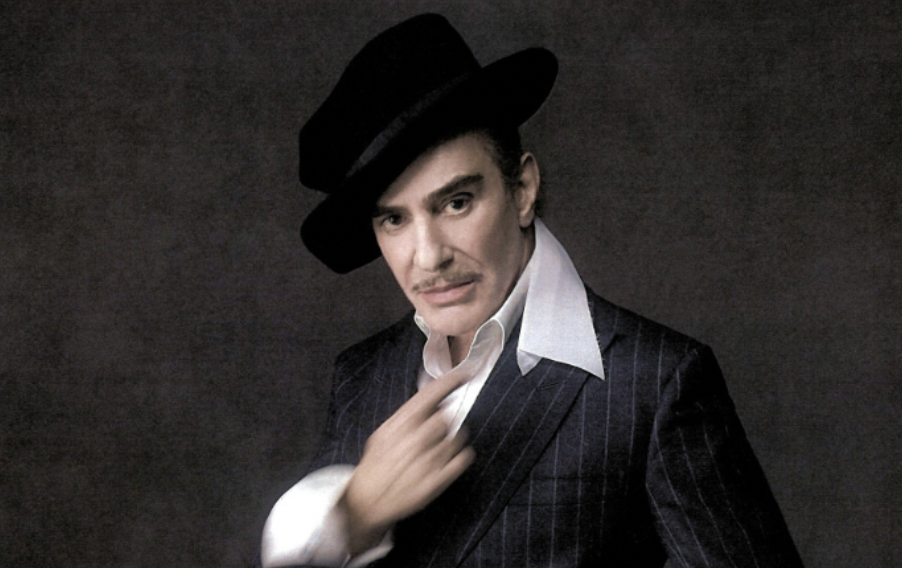
Szilveszter Mako, the photographer who shot Rama Duwaji’s historic spread for The Cut, lensed Galliano for the announcement and was honored to be a part of this historic moment! 

Gabriella Karefa Johnson, while acknowledging that fast fashion is bad, came to the conclusion that this is still good because now Galliano’s genius can be accessed by everyone. She followed that statement up with a pitch for a more sustainable spin on this partnership — what if Galliano used Zara’s excess materials and waste for this collection?! It could mean equality and progress! (as long as you’re not a garment worker for Zara). 

Amy Odell took a less political, more business-focused approach to formulating her take: that this is a savvy move by both parties! Bring Galliano to the people which benefits Zara, and continue to exonerate Galliano’s name which benefits Galliano! What it means for the rest of us did not seem relevant. 

Stylist Kelly Augustine voiced a skeptical “huh” that has me desperate to know more about what she’s thinking — its unlikely that her criticism of this decision is rooted in a disapproval of fast fashion, since she often collaborates with brands like HM and Banana Republic on her own page. 

Reliably political voices in fashion like Brett Staniland were bummed. “I’m gonna need a day,” he posted on his Instagram stories. Knowing Brett’s commitment to fashion ethics and sustainability, I have no doubt he’s processing the shattering revelation that a genius like Galliano is sullying his legacy by collaborating with the enemy. 

Many people’s instinct upon reading the news that the king of haute couture is now at Zara was to scream “RECESSION INDICATOR!” into the abyss, which….sure. Galliano has been sporadically employed since his antisemitism scandal (more on that later), and after leaving Margiela, I’m sure the man needs a paycheck. Relatable to anyone who has ever needed to find work or fumbled a massive fashion empire by making Holocaust jokes.

So what’s the reality here amidst all the fashion industry hot takes? Is this Good or Bad? Is this a sign that we’re all about to finally be fashionable at a great price or a sign that our economy is crashing? 

“I actually don’t think this is a recession indicator at all,” some defenders have claimed. “How is John Galliano designing for Zara any different from any H&M designer collaborations we grew up with? Lagerfeld, Rousteing, Elbaz, Margiela, Kawakubo, Versace, everybody played the H&M game at the time.” I’d argue it’s not that different. We should just know better now than to fall for the art-washing of fast fashion corporations. 

Further, I think the “recession” framework is dated. This is not a recession indicator because we are not in a recession so much as we are in the hollowed-out husk of a society so ravaged by capitalism that if you want to make money at all you have to work for one of six conglomerates that either sells slave labor sweaters for $2000 or sells slave labor sweaters for $40. Did we need an indicator to know that a luxury fashion ecosystem dependent on people queuing out the door to drop $10k on a bag while millions of people are skipping meals in order to cover their medical costs is not a sustainable business model? Did we need Galliano to contract with Zara to know that we can’t infinitely extract resources from our planet and end up okay? Did we need a recession indicator to know that the game of musical chairs between like 10 white guys for Creative Director positions at major fashion houses won’t always have a seat for everyone and they might just turn to Zara or Gap to escape poverty or at least escape (god forbid) cultural irrelevance?

Second, I don’t really care if this move is Good for Business. It probably is. But what’s good for business is almost exclusively bad for everything else. War is good for the weapons business. Illness is good for the pharmaceutical business. John Galliano is good for the extractive-plastic-clothing-made-by-exploited-workers business. This may be a factual point, but it’s not a compelling argument in favor of its existence. 

Now is it good, from a stylistic access perspective, that more people will soon be able to afford buying clothes that have been graced with Galliano’s touch? Only if you believe that the beating heart of style is still a top-down enterprise that trickles to the masses from the runway a la the infamous Cerulean Sweater. I’m not saying fashion trends don’t get shaped by the runway, but I am saying that has more to do with how the fashion business functions than how the soul of stylistic expression functions. What Matthieu Blazy sends down the catwalk at Chanel may eventually show up on the shelves of Aritzia, but that’s a business reality more than an artistic reality. The soul of style has always belonged to the people. The ingenuity, creativity, scrappiness, and heart being put into slow fashion, independent design, thrifting, upcycling, and DIY creation is much more culturally, artistically valuable than the ability to walk into the mall and buy a blouse that says Galliano x Zara on the tag. What definition of culture are we fighting for? 

Also, I’m sorry, but it’s okay to not have things! Do you know what I mean? If the cosmic exchange rate of Getting Galliano To the Masses is that we continue gleefully funding the corporate assault on our planet and the people who make our clothes, I think we all owe it to each other to choose “no mass-produced Galliano” and cut our losses. Is the potential for how he might reimagine old Zara designs (yes, you ready that right, he’s not reimagining old Galliano designs…he’s reimagining old Zara designs) so culturally valuable that we’ll punt on our ethics and our planet in its pursuit? Do the masses of working people we are so certain will benefit from Galliano-For-Zara not include the working people who will be tasked with making these pieces themselves? 

In classic fashion-world style, none of these takes engage with the reality that this is part of Zara’s strategy to move upmarket. Their prices have steadily risen in the last several years as they are making a concerted effort to separate themselves from ultra-fast fashion like Shein while, presumably, ballooning their profit margins. Zara is moving away from being the accessible down-market brand it once was, anyway — which pokes holes in the idea that this collaboration will usher in an era of The People’s Galliano. 

Now let’s talk about the elephant in the room. The thing no one seems to want to actually talk about. Which is why Galliano has had such a volatile career that he’d need to take a position like this in the first place. 

John Galliano has been hailed as a genius since he first burst onto the fashion scene, and it’s hard to argue otherwise. It’s almost undeniable. His work is sensational across almost his entire career. At the same time, he has said some of the most hateful, ghastly things during that time -- most infamously he was caught on video in 2011 saying “I love Hitler....people like you would be dead -- your mothers, your forefathers, would all be fucking gassed” while sitting outside at a restaurant just a few minutes away from a Parisian Park named after a French anti-Nazi hero. What followed was public backlash, Galliano’s removal from work, a court trial, addiction treatment, and years out of the public eye. It’s now seen as one of our earliest examples of someone “getting cancelled.” Though as we know by now, Galliano was far from truly cancelled, his 2024 couture collection for Maison Margiela will go down in history as one of the most impactful couture shows ever. It was a triumph. Totally amazing. Him at his best.

Around this same time, a documentary about Galliano came out called High & Low, chronicling his rise and fall and rise again. 

You can insert whatever debate you find most useful about Art vs the Artist and whether or not the two can be separated (imho the answer is uh....only kind of but never totally?) but in this instance, it’s not what I’m interested in talking about. What really got these old gears of mine a-grindin’ was the coverage of the documentary by Vogue in a print issue that came out ahead of the film’s release. The coverage of the documentary, and the attempt to understand Galliano himself, perfectly encapsulated how ill-equipped the fashion industry is to process the kind of complexity Galliano and his choices present. It put on display all the strengths and limits of fashion-as-art, of film, of journalism — and how they get deployed to either challenge power or bolster it.

The film does not seek to outright exonerate Galliano from responsibility for his antisemitic statements, but rather to “give him a chance to tell his whole story” which essentially always in practice ends up exonerating a person anyway. The film is described as complicated, as not forcing anyone to forgive Galliano but still humanizing him, placing his actions within the context of a working-class childhood and an adulthood struggling with heavy addiction and immense professional pressures. It seeks to interrogate cancel culture in general, and to put forth a blueprint for what it might look like for someone to take accountability, to change and heal and make amends. To come out the other side. In the big picture of the world, that’s actually something I’m interested in and agree with, at least conceptually. I’m not sure the current shape of the Cancel Culture Machine is serving anyone, and as a generally anti-punitive person I like the idea that redemption and justice and growth are all possible. But the coverage of the documentary in Vogue, in this moment in history, made me queasy. 

How can anyone stomach an article about a film that humanizes a man who has said some of the most blatantly antisemitic things possible at a moment where charges of “antisemitism” are primarily being used to silence anyone who dares to say that the genocide of Palestinians is bad? When artists who stand up for Palestine — even Jewish artists — are smeared, sent death threats, blacklisted, and taken off of projects for allegedly perpetrating antisemitism it’s horrifying to see the pretzels people are twisting themselves into in order to pardon someone who did an ACTUAL antisemitism.

The film was directed by Kevin MacDonald, a Jewish Scottish filmmaker (not the disgraced antisemitic California professor, that’s a different Kevin MacDonald) who won an Oscar for One Day in September -- a documentary about the Israeli Olympic athletes who were killed in Munich by the Palestinian militant group Black September and was produced by ardent Zionist Arthur Cohn. In interviews, MacDonald says he’s not interested in directly forgiving Galliano, though the outcome is ultimately more powerful than his ambiguous intent. The same can’t be said for Jonathan Greenblatt CEO of the Anti-Defamation League who couldn’t forgive Galliano fast enough.

In the Vogue article, writer Maya Singer quotes Greenblatt on Galliano. “What do you do with someone like John Galliano? What I like to say is ‘We do not do cancel culture -- we do counsel culture’...And one difference is that in 2011, the public response was overwhelming--this behavior is abnormal; it’s not acceptable. What you see in the film is that John understood that, and he’s gone on to learn and to become a better person.” The ABOUT section of the ADL’s website describes the organization’s mission as “To stop the defamation of the Jewish people and to secure justice and fair treatment to all.” Greenblatt’s statement on Galliano is effectively the official “Congrats on Not Being Antisemitic Anymore!” seal of approval.

Meanwhile, Greenblatt has not been so forgiving with literally anyone who criticizes Israel at all even a little bit, either before this current 150+ day genocide in Gaza or now. In 2022 Greenblatt compared criticism of Israel to white supremacy. According to the Guardian “The ADL has said antisemitic incidents in the US have risen 388% since 7 October. But its data is difficult to make sense of, precisely because of questions around how the ADL defines antisemitism.” For an organization so concerned with antisemitism, why are they wasting their breath sanitizing a man who said Jews would “all be fucking gassed?” Why, in the eyes of the ADL, is that a forgivable stance but saying that Palestinians deserve freedom is not — even coming out of the mouth of a Jewish person? Perhaps it’s because the ADL is not concerned with the defamation of Jews so much as they are concerned with the defamation of power.

The Vogue article does not mention the words “Israel” or “Gaza” or “Palestine.” It makes no mention of what it means to put out an antisemitism redemption story in a moment where a flimsy and disputed definition of “antisemitism” is used as justification for the murder of (at the time) 10,000 Palestinian people. Singer vaguely nods to “the conflict in the Middle East” and lets us know that MacDonald had no intention to comment on it at all with this film. A comment in and of itself, obviously.

Vogue, this film, and now Galliano’s partnership with Zara (a BDS target, by the way) and the way the fashion industry talking heads are all responding to it is suspended in some alternate reality where a genocide against Palestinian people is not unfolding, where our planet is not burning, where workers are not having their wages stolen, where it’s possible to discuss the dangers of real antisemitism as forgivable while the consequences of fake antisemitism take thousands of lives. 

At the end of the day, I’m less interested in the individual case of John Galliano and whether he deserves forgiveness or a platform or whatever. I do actually believe people can change, whether he has or not I simply cannot know. But what I am interested in are the lengths this industry will go to absolve him of his sins — whether its antisemitism or fast fashion collaboration — simply because his work is beautiful, while remaining silent on matters of true life or death. Fashion as told to us by Vogue posits that goodness inside will always be visible on the outside. It sells us on the idea that there is an intrinsic link between beauty and morality, that anyone making something amazing to look at must have some well of goodness it’s spouting from. When really there is plenty of terrible beauty out there. 

Even if Galliano isn’t a perfect example of it.